Updated 2026.
“You’re not going to make us pose, right?”
It’s the question that comes up most often in a first conversation. There’s usually a little apprehension behind it, and sometimes a request in disguise: please say no.
I say no. But the honest answer runs longer than that, and I think the longer one is more useful to you.
The photographs you think of as natural, the ones where nobody appears to have been placed anywhere, are almost all directed. Not in the sense that someone told you what to do with your hands — in the sense that someone decided, before you and without mentioning it, where you were going to be standing and when.
This article covers what I actually direct during a wedding day, and what I never direct. That distinction is the one that matters when you’re choosing a photographer.
Why traditional posing breaks something
When you pose, you leave the moment. Your attention shifts to managing your own image: am I looking in the right place, is this my good side, what do I do with this arm. In that second you’re no longer inside your own day. You’re playing your part in a photograph.
It shows. Maybe not the next morning on a phone screen, but in ten years, yes. A posed photograph is a memory you manufactured. A lived one is a memory you get back.
Except the opposite doesn’t work either. A photographer who never intervenes, who leaves you standing in a field waiting for something to happen, doesn’t produce truer images. He produces worse ones — shot from too far away, in light he didn’t choose.
What I direct, without you feeling it
There are four things I decide during your day, and none of them involve your body.
The light. It’s the one non-negotiable. I look at where it’s coming from before I look at who’s in the frame. If I suggest stepping outside during cocktail hour, it isn’t because I feel like a walk: it’s because in twenty minutes that light won’t exist anymore.
The place. I’m looking for clean backgrounds, walls that don’t compete, spots where nobody is going to walk through. You’ll never know I ruled out three locations before bringing you to the fourth.
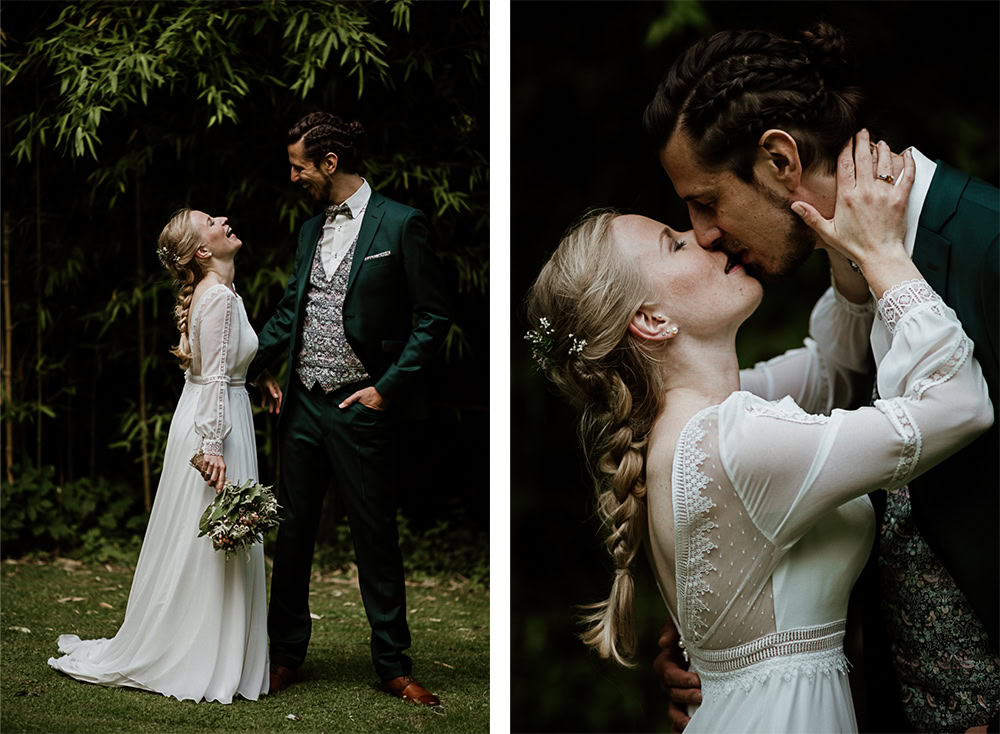
The movement. Instead of a posture, I give you something to do. Walk toward me and tell each other about your first date. Close your eyes for a second after the ceremony and come back down. The body starts moving, and the mind eventually forgets the camera is there.
The timing. Knowing when not to be there. Backing up ten feet during a moment between a daughter and her father, going quiet while a letter is read out loud. That part of the job is completely invisible, and it’s the part that produces the images you’ll care about most.
Invisible direction: you live your day, someone else handles the conditions.
What I never direct
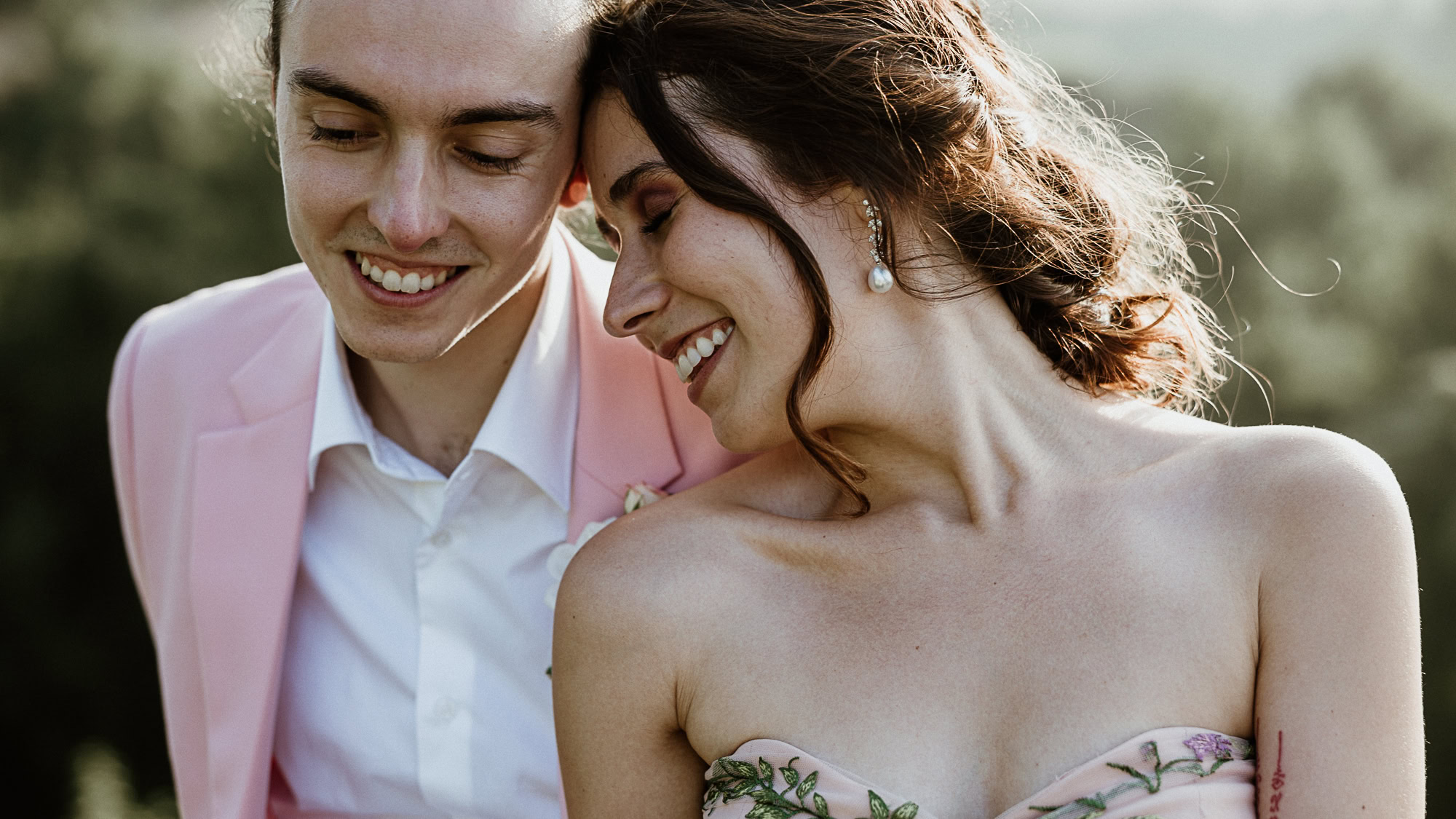
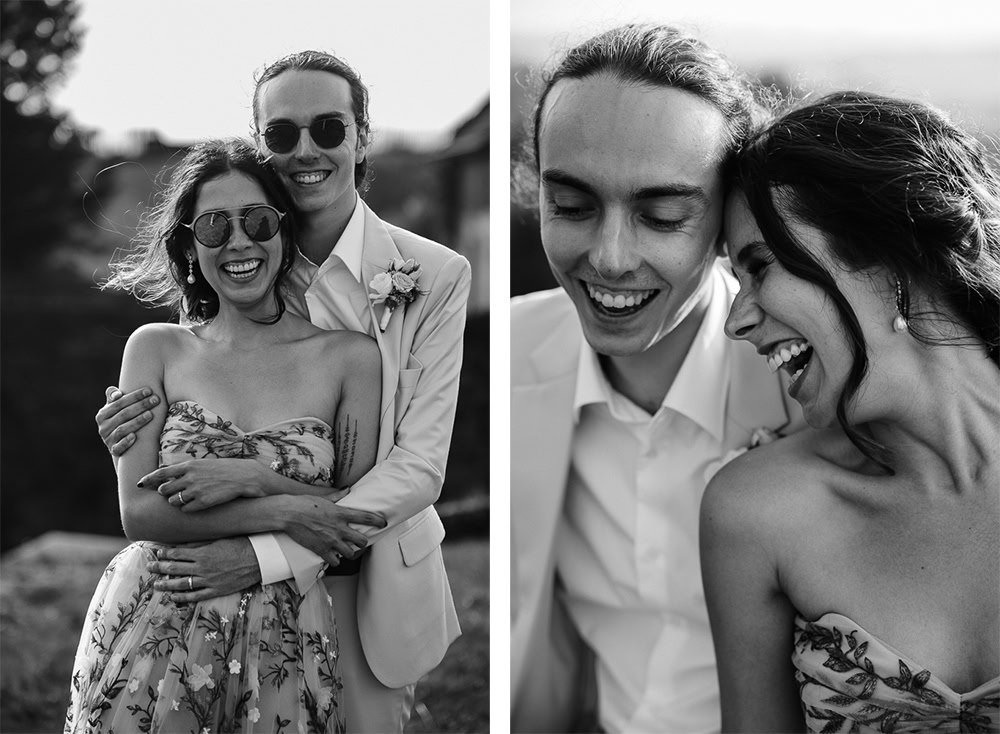
Your faces. I don’t ask for a smile, I don’t ask you to look at the lens, I don’t correct an expression. A smile on command and a real one don’t look alike, and the difference is obvious years later.
The way you touch each other. A hand tightening, a forehead against a shoulder, the way you find each other across a crowded room: that belongs to you. My job is to be in the right place when it happens, not to make it happen.
And the emotion, obviously. Nobody can stage a mother losing it during the toasts. You can only be ready.
The one exception: family formals
Group portraits are directed from beginning to end, and I own that. I place people, I straighten the line, I count heads, I call the room back to order. It isn’t a style, it’s a professional obligation: these are often the only images that include people you won’t see again.
Twenty minutes, a list prepared in advance, and we’re done. The rest of the day has nothing to do with it.
How to spot it in a photographer
A portfolio won’t tell you anything: everyone puts their twenty best frames from five years of work in there. Ask instead to see one full wedding, start to finish, from the photographer you’re considering.
Then look for three things. Whether the same three poses come back from one wedding to the next — a sign the photographer is running a catalog rather than watching what’s in front of him. Whether there are frames from the moments when nobody is posing: getting ready, the wait before the entrance, the end of the night. And whether the guests exist at all, or only the couple.
That said, there’s no single right answer. Some couples genuinely want to be directed, want to be told what to do, and are more at ease that way. That’s a legitimate choice, and there are excellent photographers for it. What matters is knowing which one you want before you sign, not after.
The real test happens in twenty years
A wedding photograph isn’t judged the next morning. It’s judged when you open the gallery again a long time later, and half the people who were there that day are no longer reachable, or no longer here at all.
At that point you won’t be looking for a catalog version of yourselves, correct and slightly empty. You’ll be looking for the laugh that creased your eyes, the warmth of someone against you, a look exchanged across the noise.
That’s why I direct the light and not the faces. Anything manufactured goes out of date. What was lived doesn’t.