There’s one thing these five venues have in common, and it isn’t their size, their region, or even their price. None of them need dressing up. The character is already there — in the stonework, in the way light moves through a room, in a garden that hasn’t been redesigned for the occasion.
When a place already carries its own history, you don’t have to fake one with fairy lights and dried-flower arches.
You can focus on something else instead: the people.
That matters even more for intimate weddings. Past a certain guest count, a venue becomes a space to fill — you compensate for the emptiness with decoration, you structure the day to keep everyone occupied.
At thirty, fifty, eighty guests, the equation changes entirely. The venue goes back to being a setting, not a set. And in the five estates below, that setting has real personality — built over centuries in some cases.
The other thing they share, quieter but just as important for how the day unfolds: in all five, I was dealing with owners who genuinely host, not managers who rent out a space. That changes how you work — less friction, more room to catch a moment when it happens.
Here are the five venues where I’ve had the chance to photograph a wedding, and what makes each one work for a smaller, more intimate day.
Manoir des Brumes, Normandy
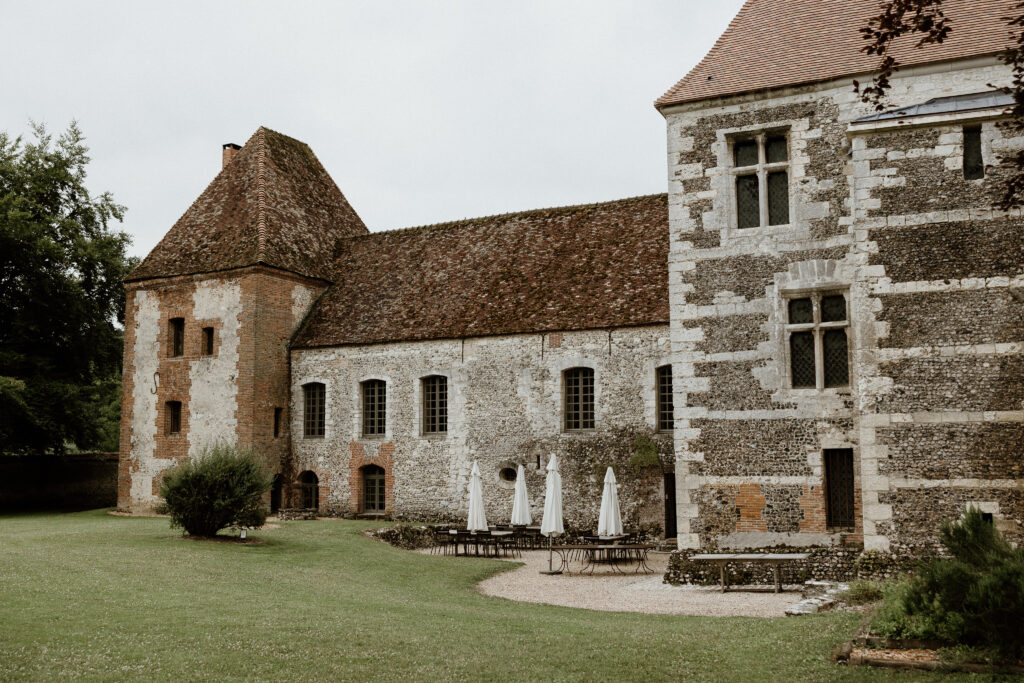
Manoir Sainte-Geneviève des Brumes, on the banks of the Epte river, is the most historically loaded of the five. The building dates back to the 13th–14th centuries, has been a listed historic monument since 1974, and literally marked the border between Normandy and Île-de-France for centuries — to the point of seeing fighting during the Hundred Years’ War.
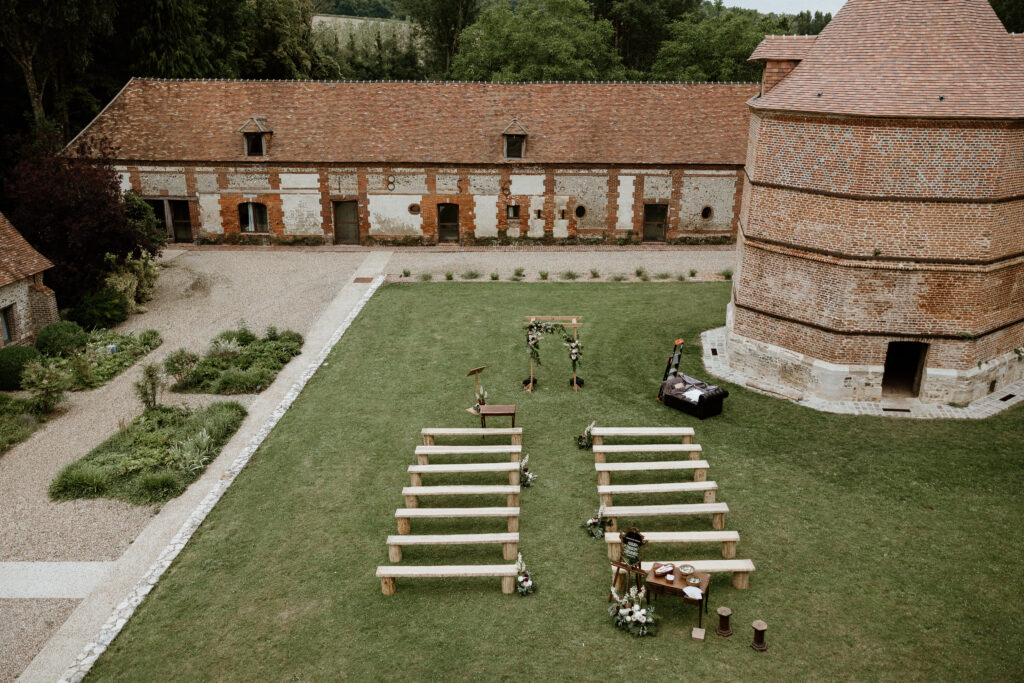
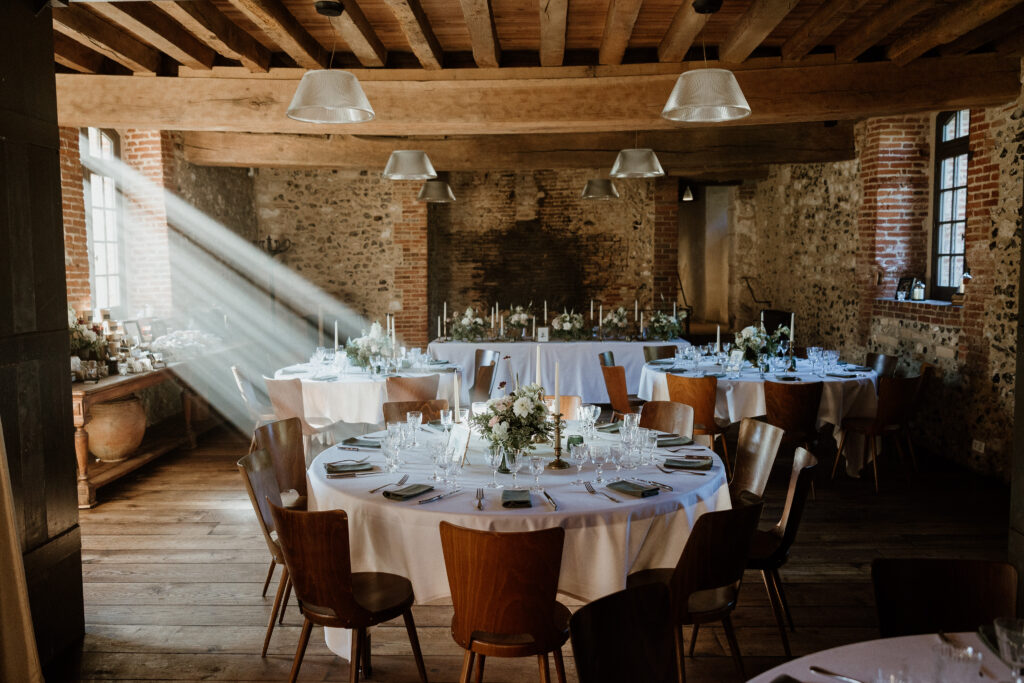
What stands out when working there is the contrast in scale: it’s a larger property than the others on this list, with a medieval character that hits you the moment you walk in, yet the dining hall itself stays intimate. It lends itself to a warm, slightly autumnal decor — I always think of it as an “autumn in Scotland” mood, with deep tones that answer the old stone well. Then there’s the grounds: a large outdoor space suited just as well to a secular ceremony as to an open-air meal if the weather allows. It lets a day breathe without needing a second location.
For a couple after real character without tipping into château-as-museum territory, this is a solid middle ground: the history is genuine, but the space still feels livable.
Discover Manoir des Brumes.
Château de Moliens, Picardy
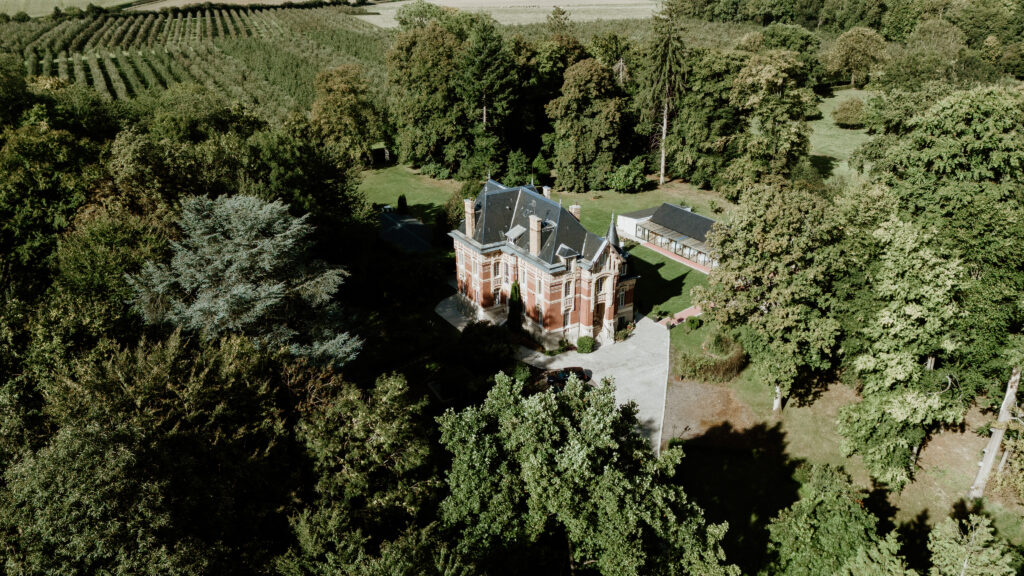
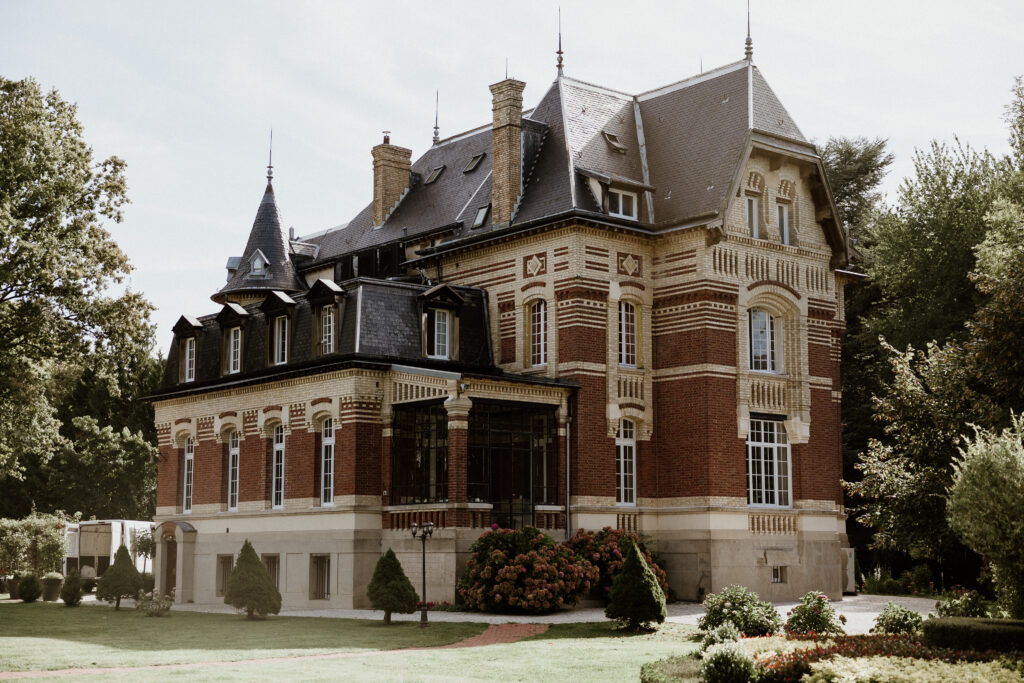
Château de Moliens makes its impression without trying too hard — that’s exactly what I wrote after shooting the wedding there. There’s something right about that restraint: an elegant place that doesn’t need to shout to be noticed.
Two spaces stand out in particular, and they work in contrast with each other. The château’s bedrooms, where the getting-ready happens, have that vintage, almost rococo style that gives the morning photos an instant sense of styling — without anyone having decorated anything for the occasion. The northern light there is soft and lets you work without flash, which changes a lot about how those images come out.
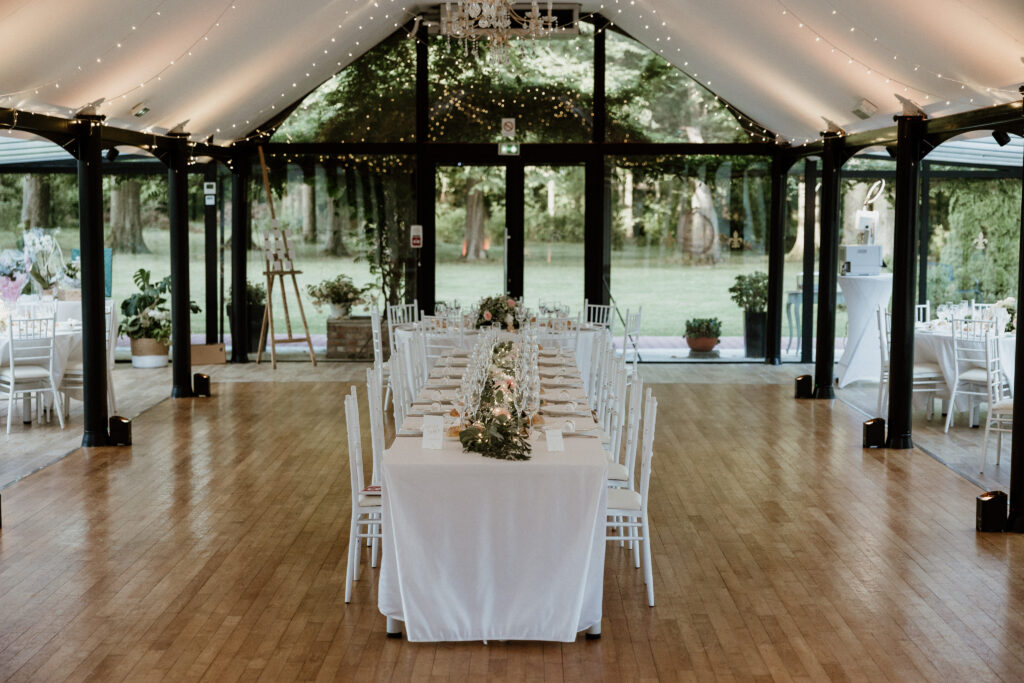
Then, for the evening, the orangery takes over with a completely different identity: very modern, almost a deliberate break from the rest of the estate. That kind of shift is what makes a full day feel visually rich without ever changing location.
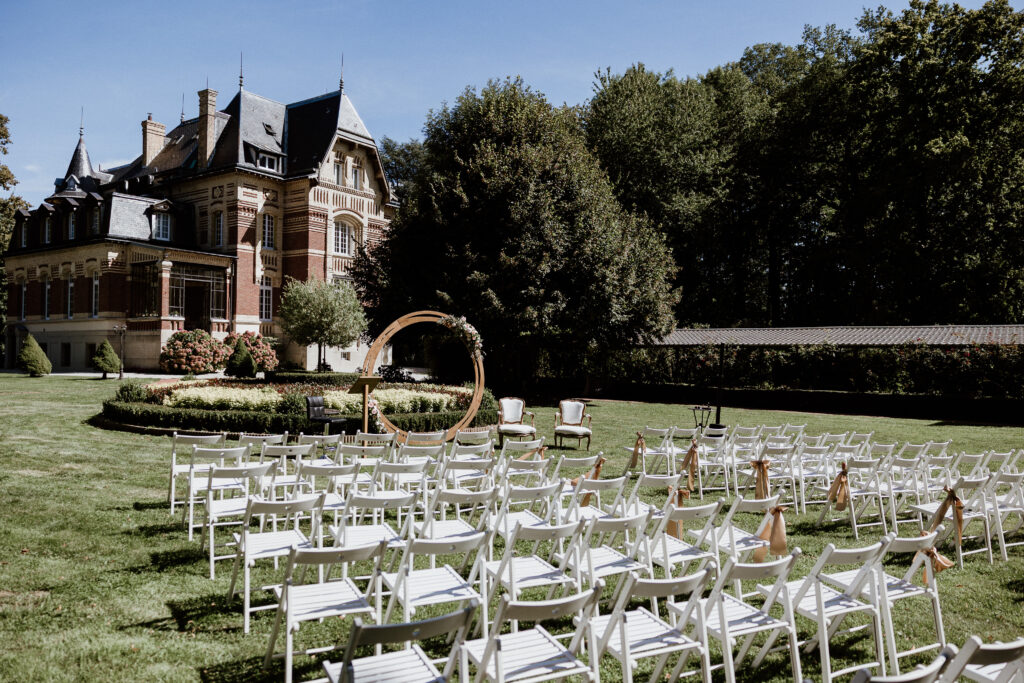
The grounds are spacious enough to set up a modern ceremony structure while keeping the château’s façade in the background — another example of the old-and-contemporary mix that defines the place.
Discover Château de Moliens.
Château Sentout, near Bordeaux
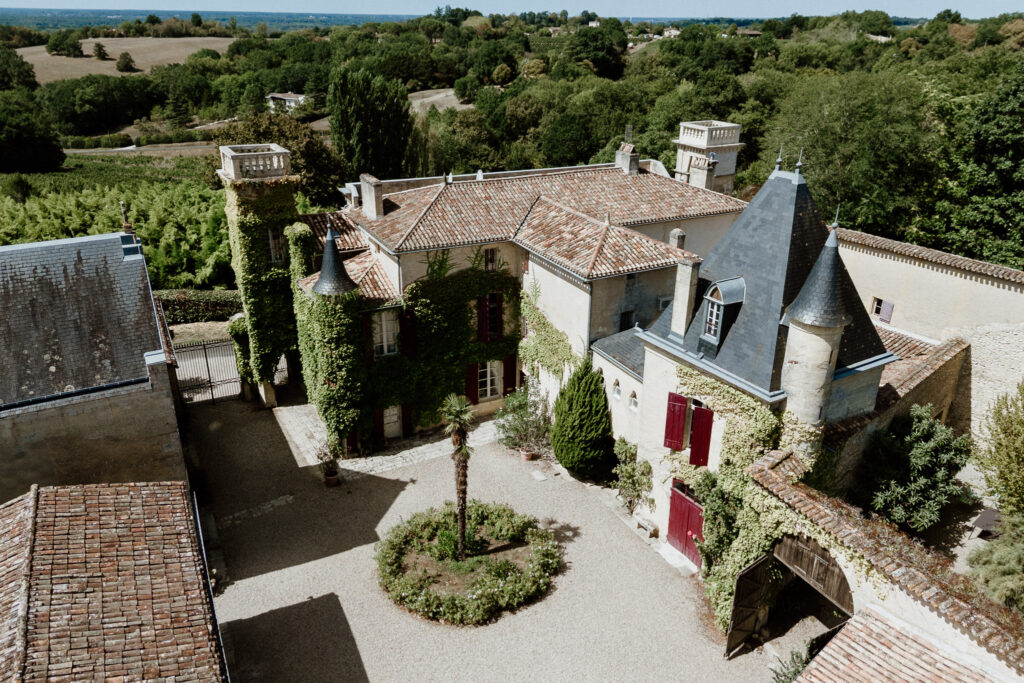
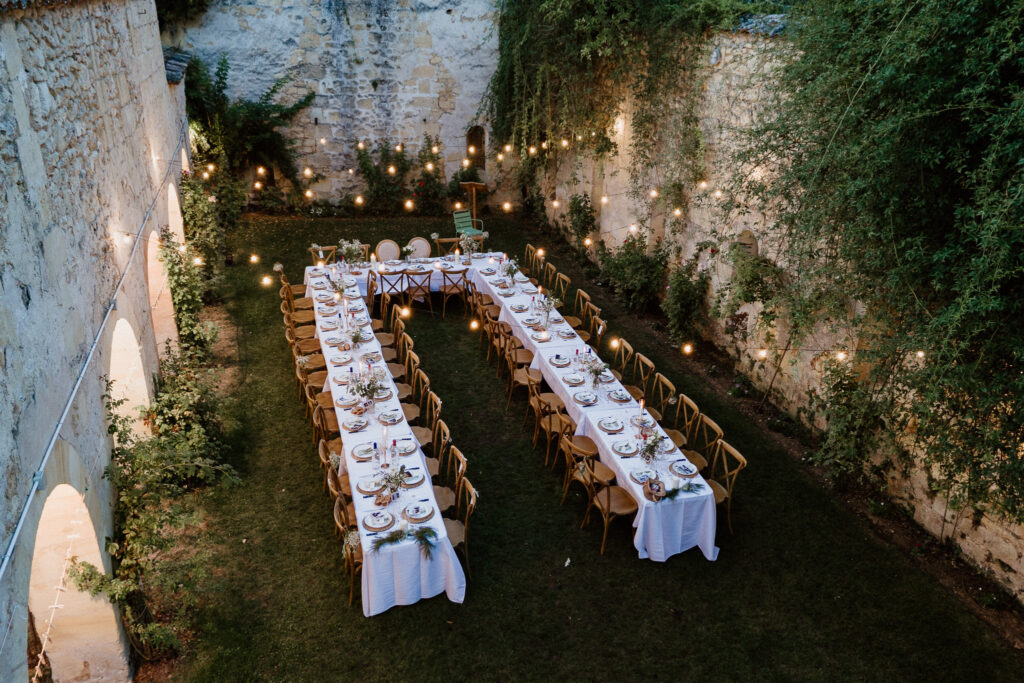
Perched on a hill above the Garonne valley, Château Sentout has one advantage I’d rank above all the others: its distinctly medieval atmosphere, carried by a stone courtyard and a chapel with stained-glass windows dating back to 1860. It’s one of the rare venues on this list where the historic feel comes through as strongly indoors as outdoors.
Its real strength for a small wedding is the rose garden. Being able to host an outdoor dinner under flowering arches, in a setting this well kept, is rare — and it completely changes the light and mood of an evening compared to an indoor hall. But what makes the venue genuinely reliable, rather than just nice on paper, is the indoor fallback in case of rain.
For a photographer, that flexibility matters: it means no version of the day is a compromise. Plan B has just as much character as Plan A.
It’s a venue built for a smaller guest list, and it shows in how every space stays human-scaled.
Discover Château Sentout.
Domaine de Beaufort, Dordogne
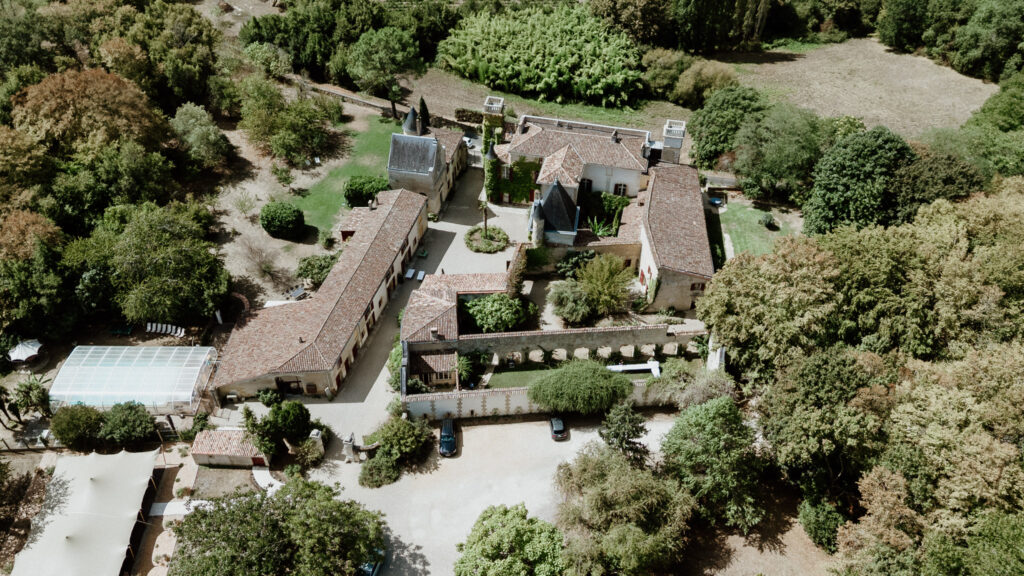
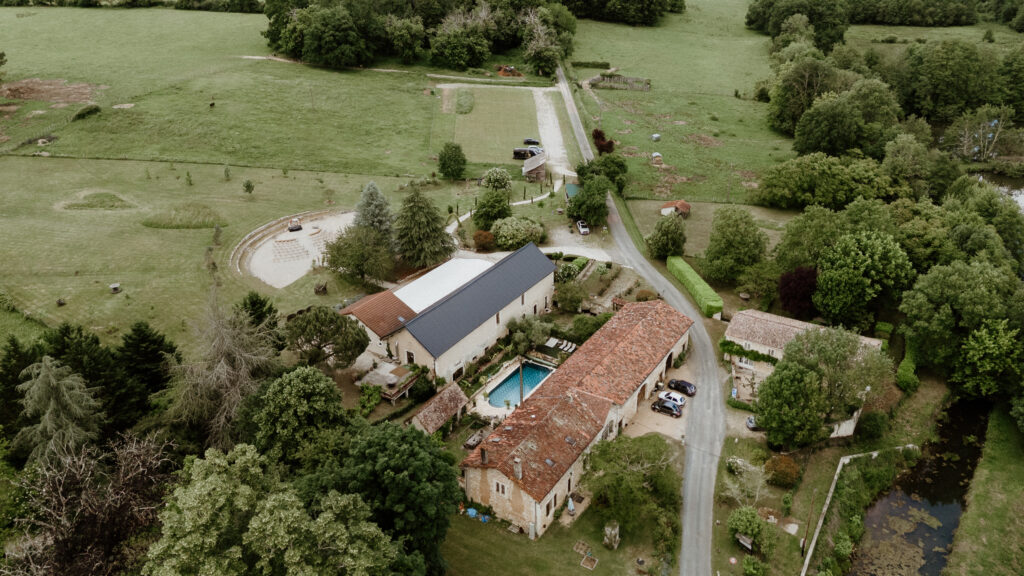
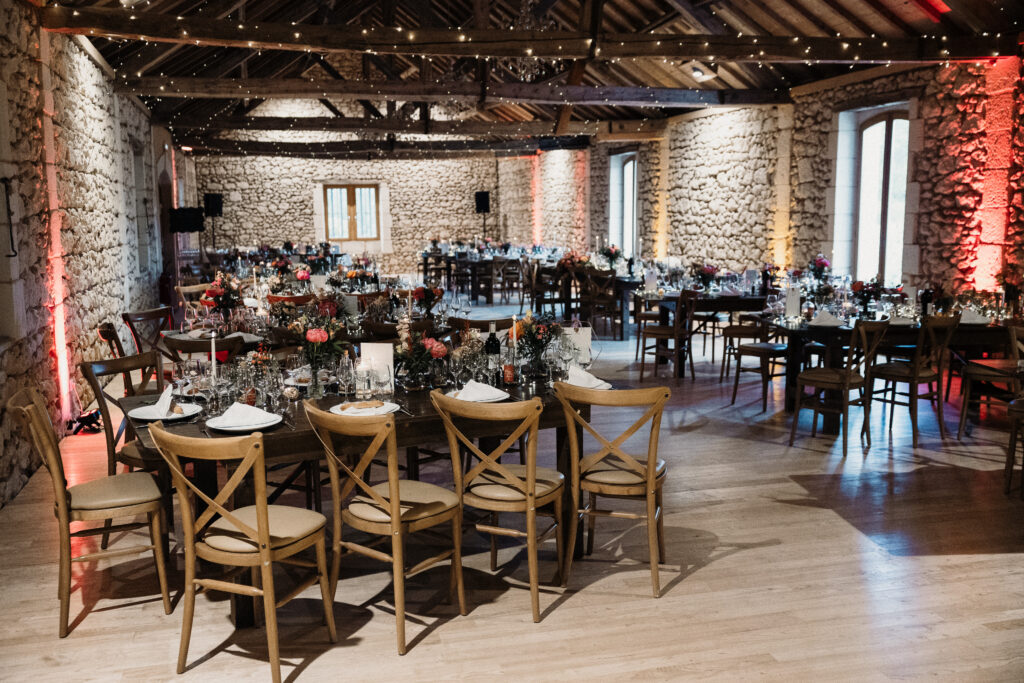
Domaine de Beaufort, in the heart of Périgord Blanc, plays a different hand than the previous three: what stands out here isn’t historical grandeur but an almost domestic sense of coziness. The buildings sit close together, which creates real proximity between guests — you don’t feel scattered across an estate, you feel like you’re living, for a weekend, in one big family home.
That’s exactly what I look for when documenting a small wedding: a place where people naturally cross paths, where the day drifts gently from one space to the next without needing to be herded. The pool, set in an inner courtyard, adds a completely different dimension to a wedding weekend — a barefoot brunch by the water the next morning, in a relaxed mood, far from the previous day’s formality. That kind of moment, just outside the wedding itself, often produces truer images than the ceremony does.
Discover Domaine de Beaufort.
Moulin de Launoy, Seine-et-Marne
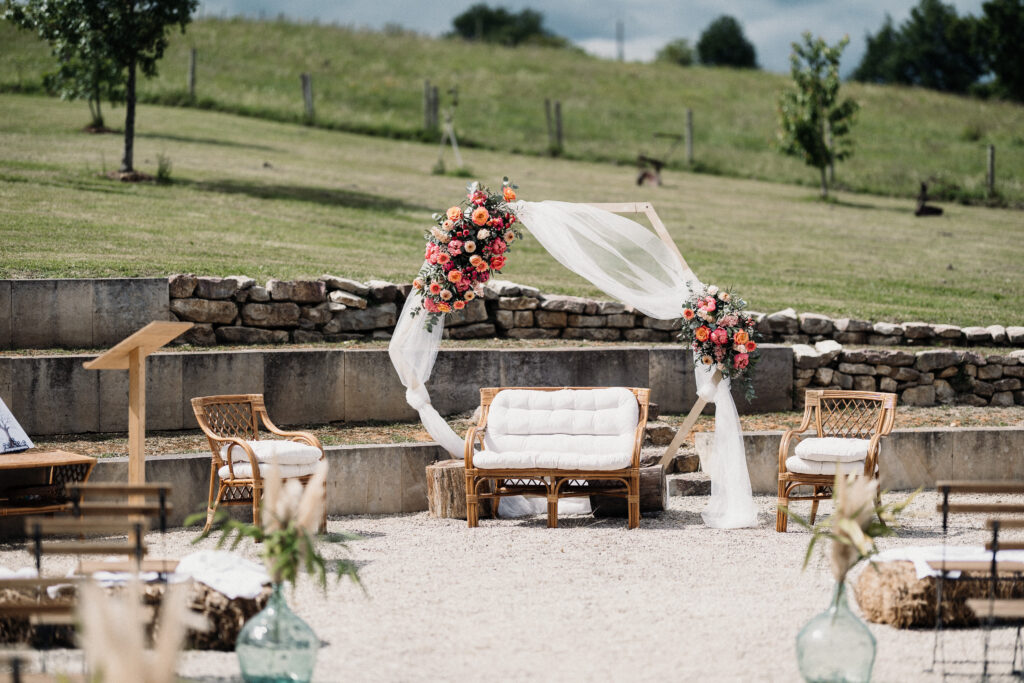
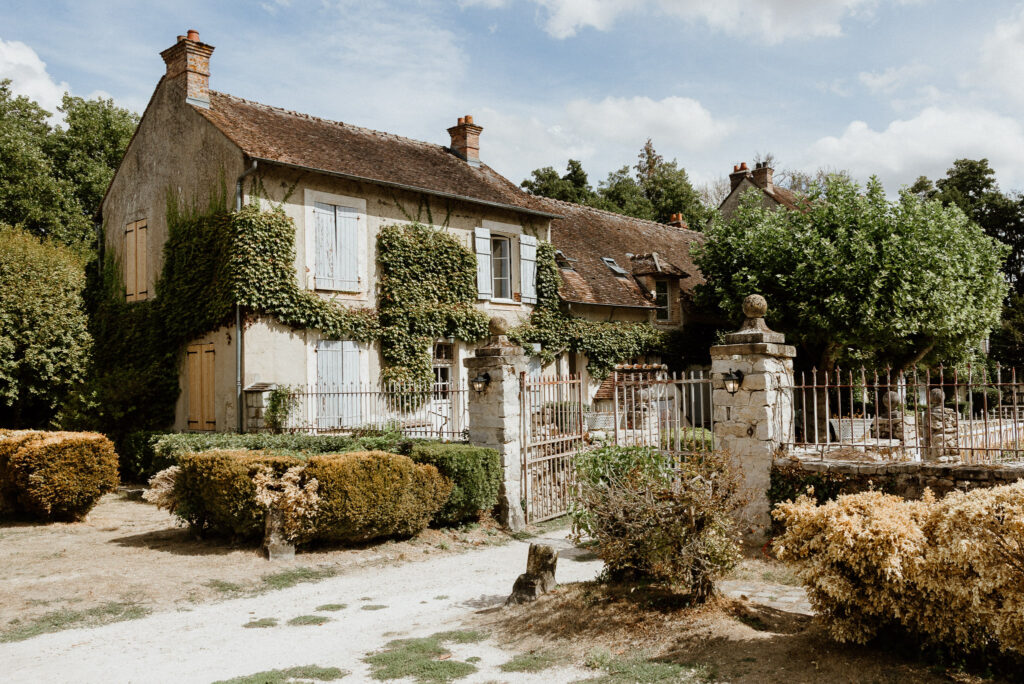
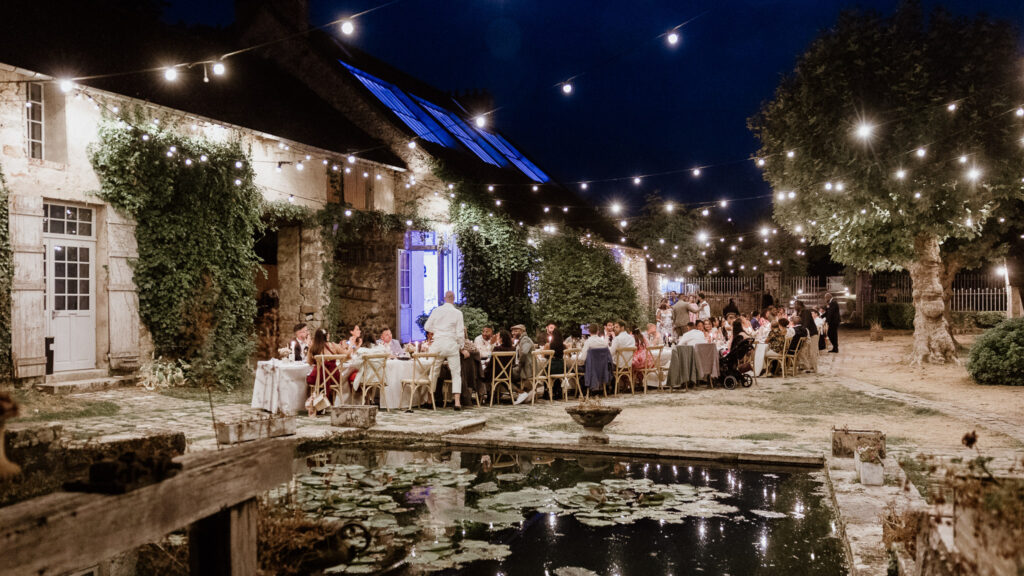
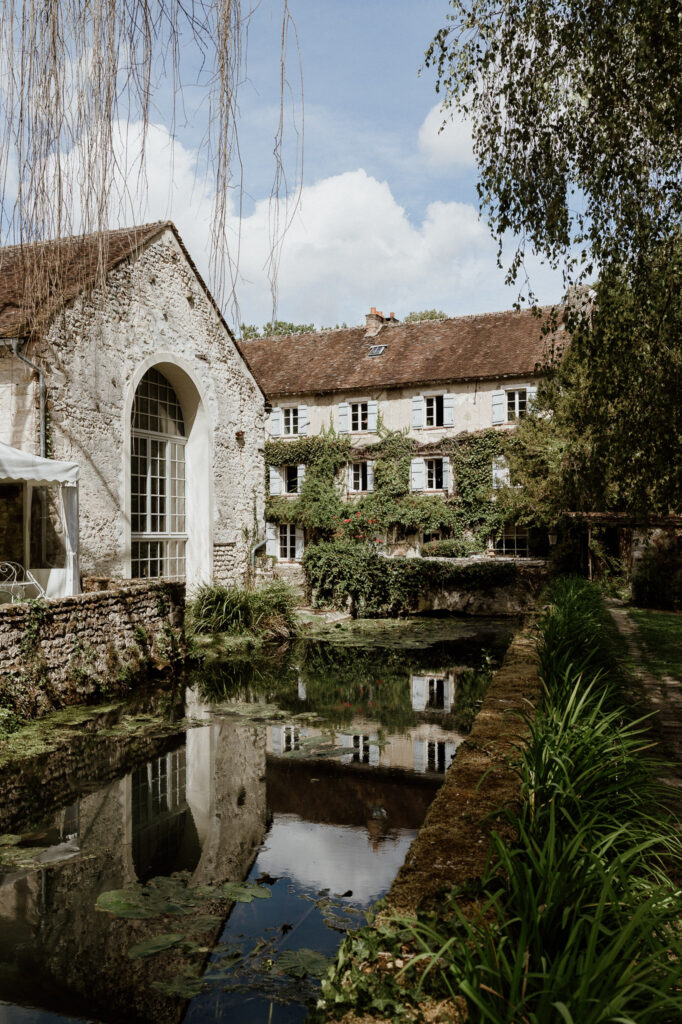
About twenty minutes from Fontainebleau, Moulin de Launoy is the most literally alive of the five: the Lunain river runs straight through the property, and the mill’s old machinery is still visible on the garden side. It’s a setting that moves and makes sound, which is rare and valuable when you’re building a mood in photo and video alike.
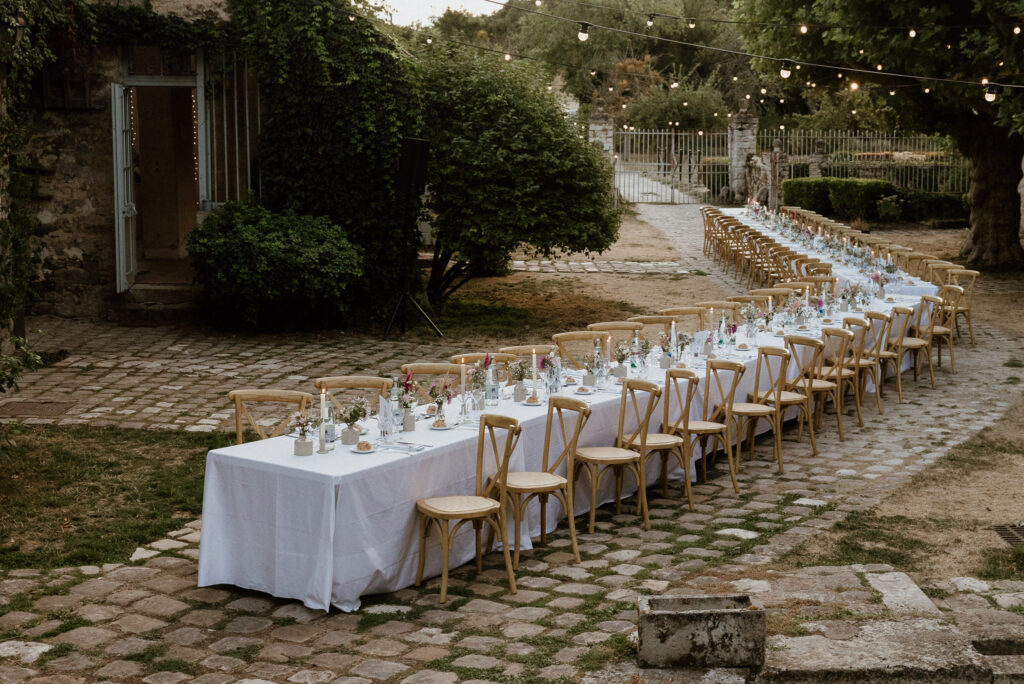
In summer, the estate’s true signature is the long table set up in the courtyard. It isn’t a reception hall in the classic sense — it’s a shared meal in a setting that feels more like an extended family gathering than an organized event. For an intimate wedding, that setup works particularly well: it erases the distance between “the head table” and “the guests.” Everyone shares the same space, the same evening light, the same sound of running water in the background.
Discover Moulin de Launoy.
What They Actually Have in Common
None of these five venues needed transforming to be photogenic. It’s not a coincidence that they all made this list: an intimate wedding works well precisely when the venue asks for nothing — no volume to fill, no set to impose. There’s room left for what actually matters that day.
If one of these five estates speaks to you, or you’re looking for a similar kind of character elsewhere in France, let’s talk.


