On the day itself, you won’t know which images will end up mattering.
You find that out later, going back through the day in the finished gallery — and it’s rarely the ones you expected.
That’s the one thing you can’t decide in advance. What you can do is give them room to happen.
A day that’s packed too tight lets nothing happen. You move from one thing to the next without any of it having time to exist. The pictures show it, inevitably.
So it all comes down to something you settle long before the day: how you build your timeline.
Here are the reference points I give my couples.
They aren’t rules — they come from what I’ve watched work, wedding after wedding, since 2012.
Separate the paperwork from the party
If I could give you one piece of advice and nothing else, it would be this one: don’t get the legal part done on the same day as your celebration.
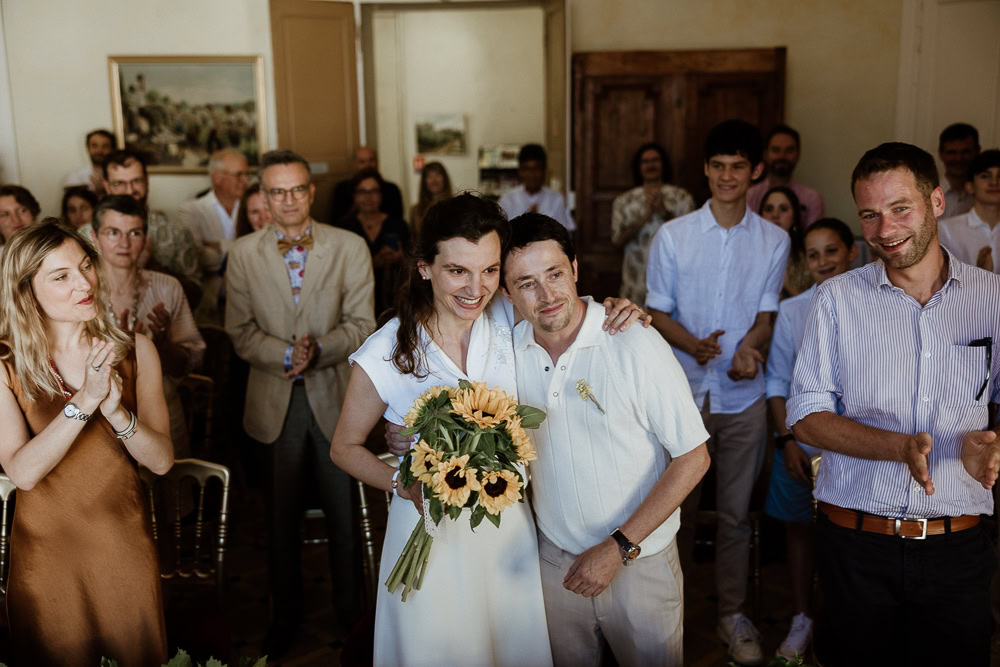
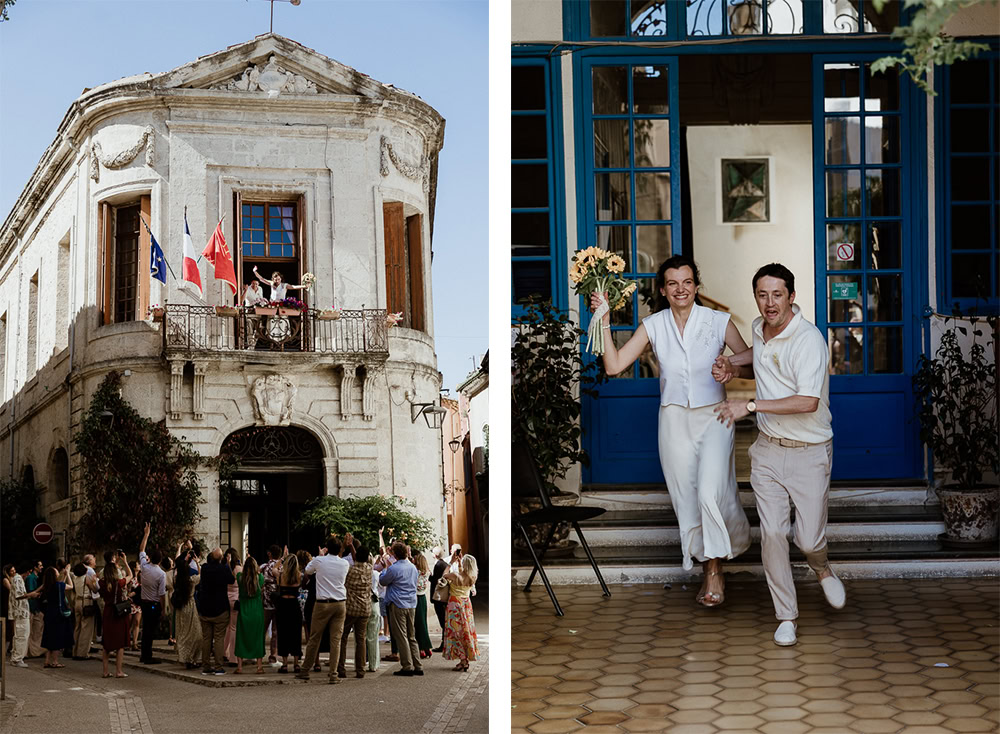
If you’re marrying in France, this matters more than you’d think. French law recognizes only a civil ceremony held at the town hall — the mairie — and no symbolic ceremony, however beautiful, replaces it. That appointment is a fixed slot in the middle of your day, plus a round trip, a change of venue, and a hundred guests to move from one place to another.
Hold it the day before, or earlier in the week, and the constraint disappears. On the day of the party, there’s a single ceremony left — celebrant-led or religious. Less time in a car, more time that’s actually yours.
The same principle holds wherever you’re marrying. Anywhere the legal formality has to happen at a specific place, on someone else’s schedule, it’s worth getting it out of the way beforehand.
Separating the two also opens up something few couples consider: turning the wedding into a weekend. Friday evening with the inner circle — close family, oldest friends — around something simple. A food truck does the job beautifully, often better than a seated dinner. Think of it as a rehearsal dinner without the rehearsal.
You finish setting up the venue together, you have a drink, the two families meet for the first time without the weight of tomorrow on them.
By Saturday morning, nobody is wondering who’s who.
This matters most when your venue is far from home. If you live in London or New York and you’re marrying in Provence or Brittany, everyone is making the trip anyway. They may as well arrive the night before.
And if a full weekend is too much to organize, there’s another route: hold the civil ceremony at a completely different point in the year. A small group, in your own town, a few months ahead.
Each step then gets its own space, and the day of the party belongs to nothing but the party.
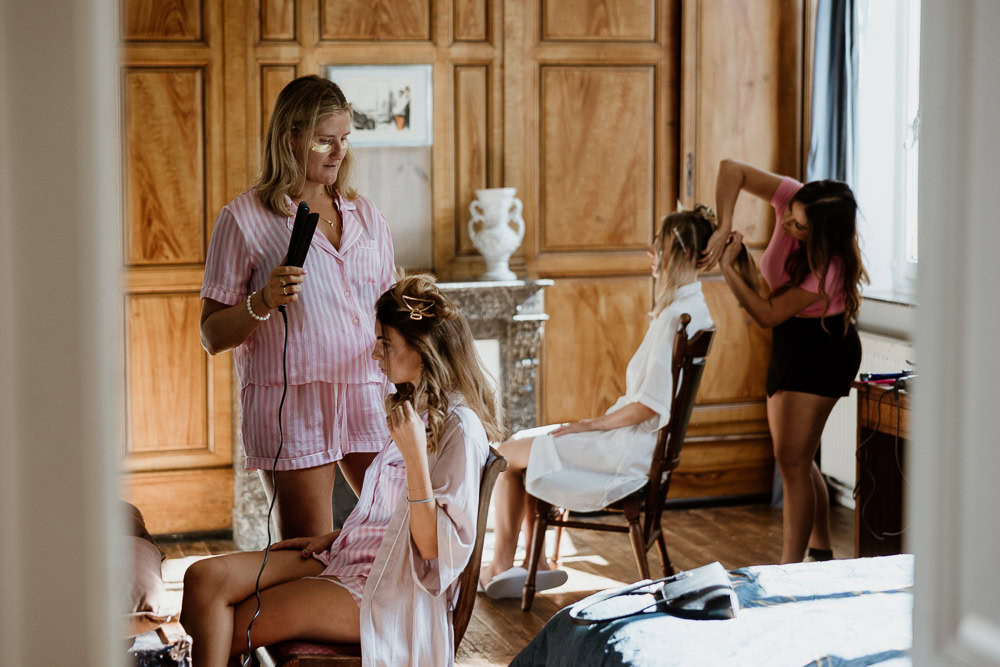
Getting ready: start late, and start well
Most people picture getting ready as a formality to photograph — the dress, the cufflinks, one last pass with a brush.
For me, that’s where the story starts.
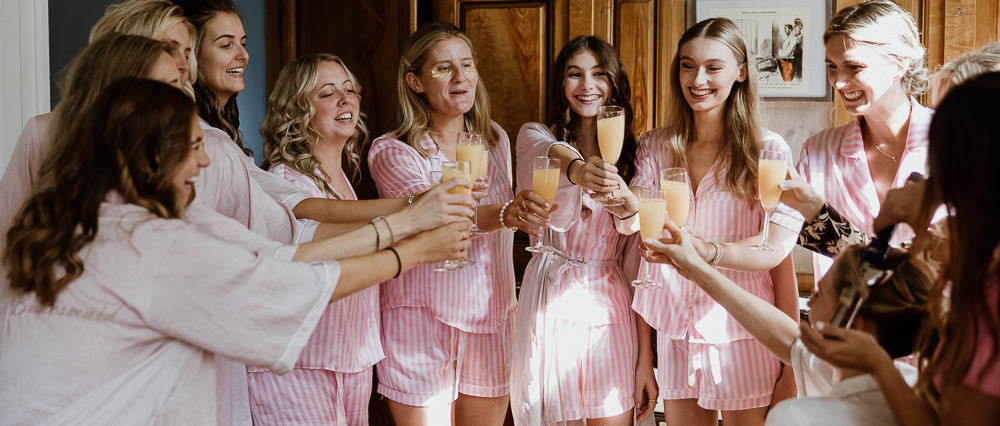
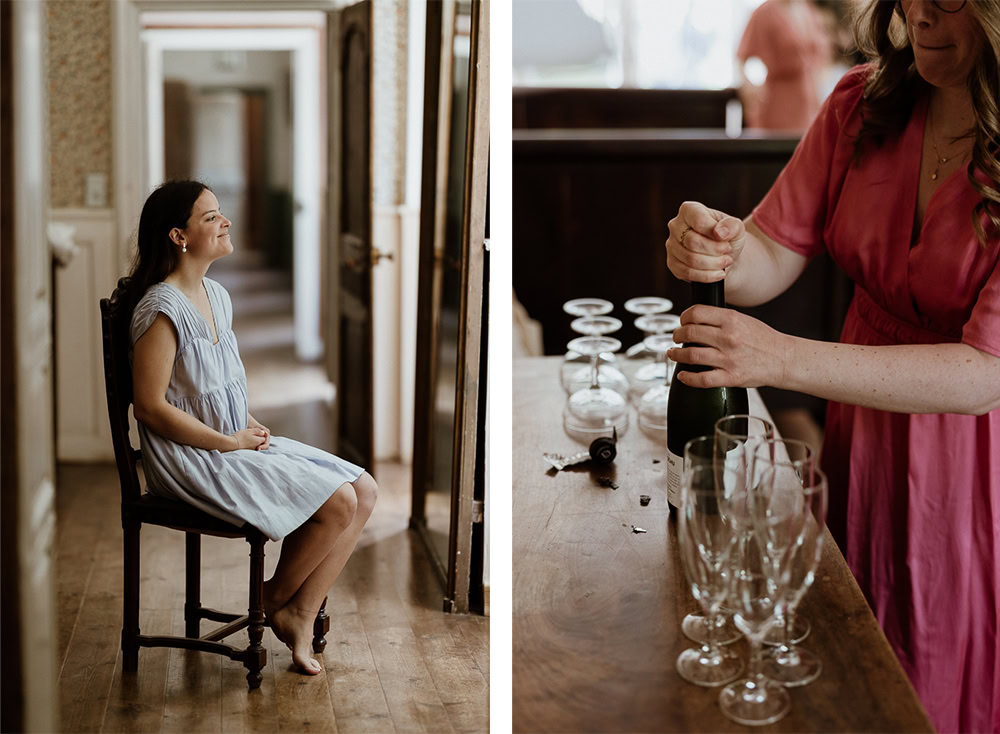
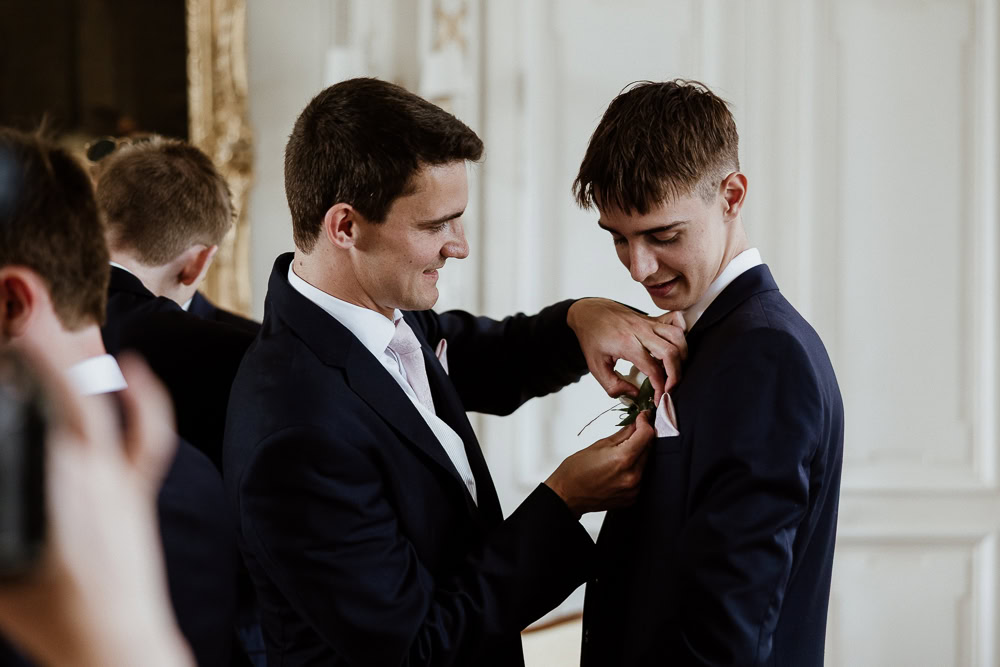
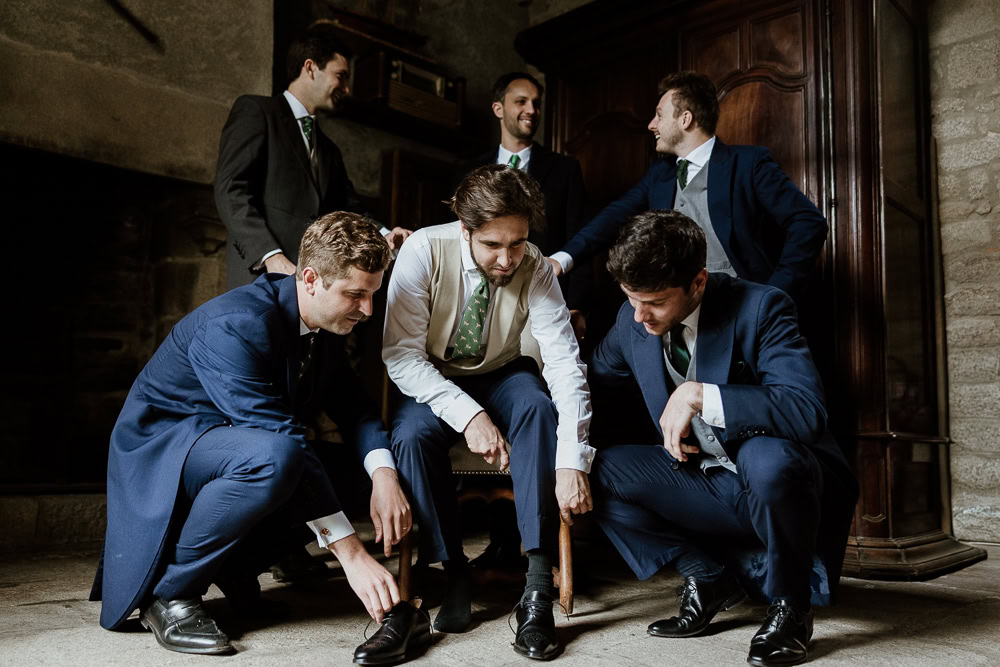
With the legal part out of the way, nothing forces you to be up at dawn. Late morning is plenty. Surround yourself with the people who matter: your closest friends, your brothers and sisters, your parents. Open a bottle. The pace you set here sets the pace for the whole day.
If your ceremony takes place at the venue itself, you have the most comfortable timeline there is: you don’t move.
Brunch around noon with the people closest to you, final preparations early in the afternoon, ceremony straight after. The same logic works for a religious ceremony in the middle or late afternoon.
One thing deserves your attention, because it’s the only one I can’t do much about once I arrive: the room you choose.
I’m always looking for a large space where everyone can fit, with a real source of daylight — a wide window, a set of French doors. This isn’t an aesthetic preference. Daylight gives faces a softness nothing else replaces, and it lets me work quietly, without setting anything up.
A cluttered corner of a bedroom under a yellow bulb, on the other hand, means an hour of getting ready spent limiting the damage. If your hairstylist or makeup artist sets up in a dark spot by default, move the table. It takes two minutes and it changes the pictures.
Brunch: the part nobody thinks to plan
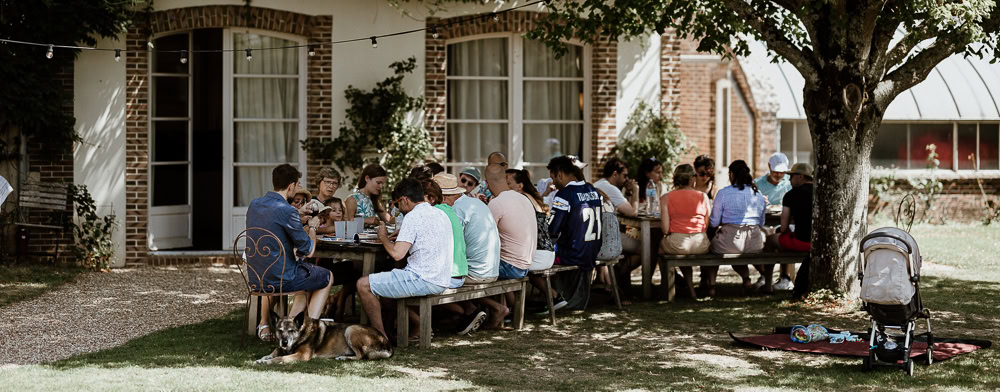
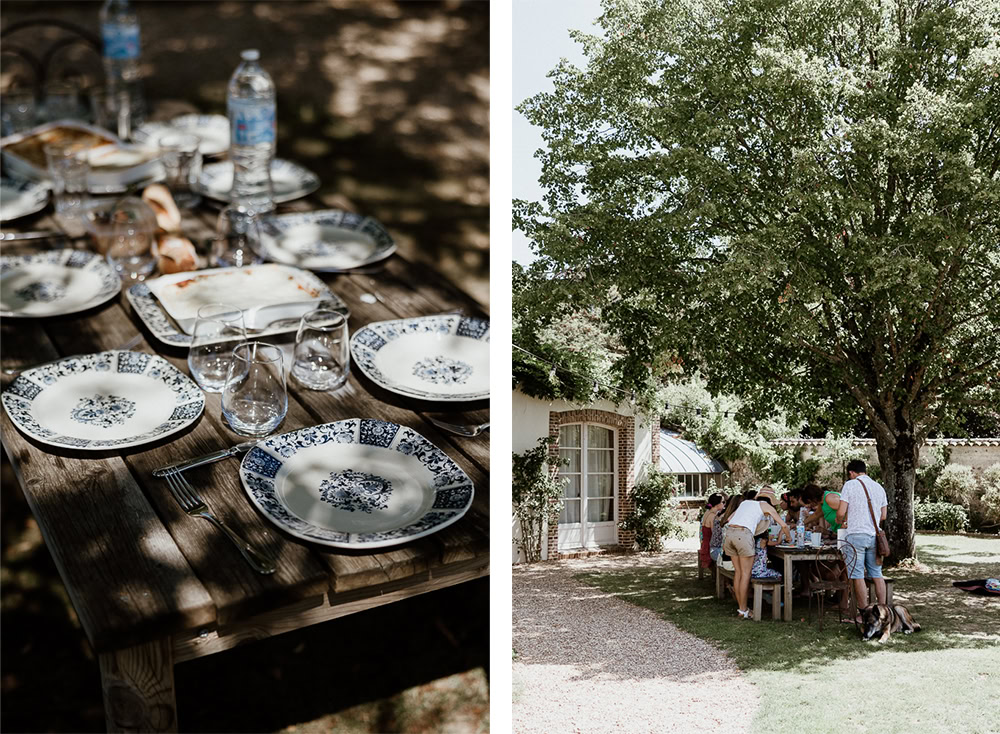
If your morning is free, an informal lunch on site is one of the best decisions you can make.
It’s the hinge of the day. The families who haven’t met yet meet there, standing, glass in hand, with no protocol involved. The mood loosens for good, and it never tightens back up.
For me, it’s also the point where I stop being just the photographer.
I move around, I talk to people, I work out who the grandfather is, who the best friend is, who’s giving the speech. Two hours later, nobody notices the camera anymore.
Which is exactly the point: the photographs you’ll keep are the ones people didn’t see coming.
The idea isn’t to put on a second banquet. A table set simply, good food, and time. That time belongs to you, and it shows on your faces.
The First Look: two moments instead of one
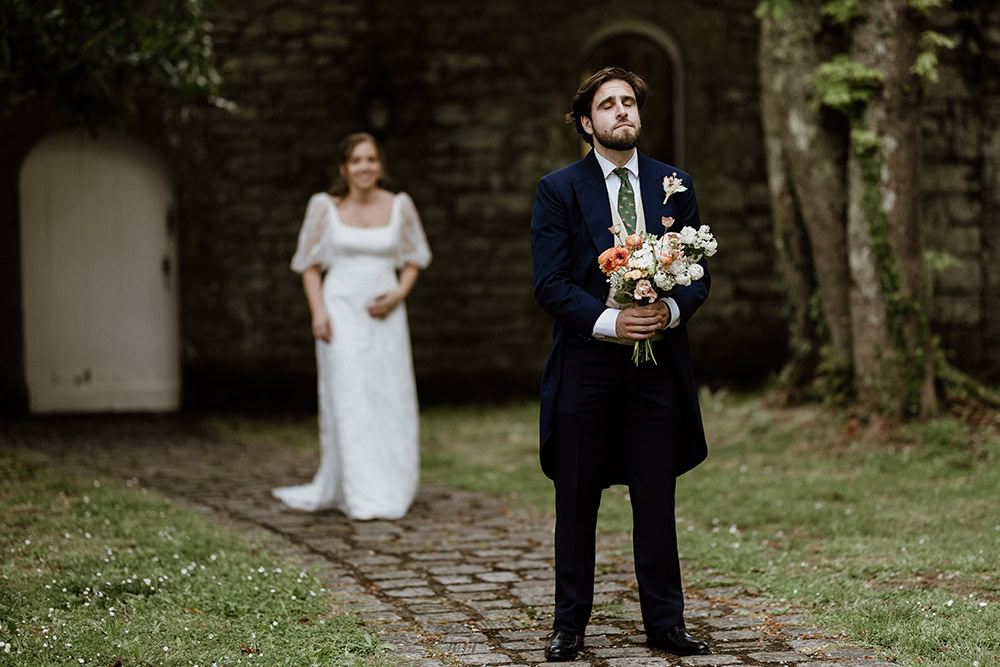
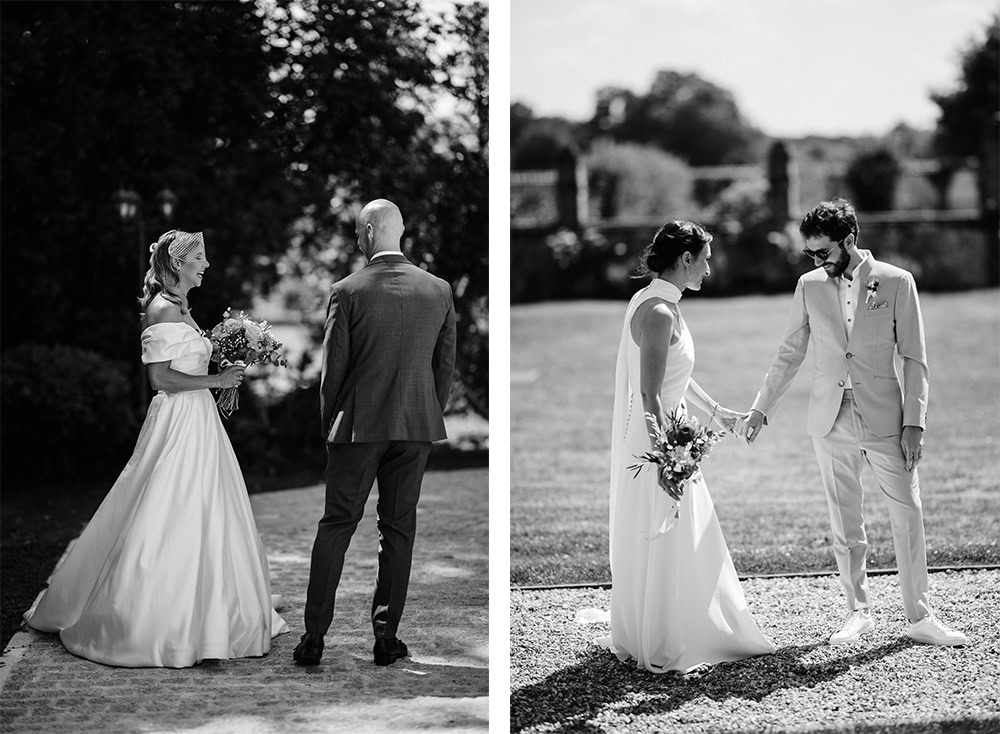
I hear the same worry constantly: seeing each other beforehand will spoil the surprise of the aisle. I’ve been photographing weddings since 2012, and I can tell you the opposite is what happens.
Once you’ve walked down that aisle, you’re in a tunnel. The vows, the speeches, the congratulations, the hundred people who want a word with you. You’ll live all of it intensely, but you won’t live it as two people.
And if you skip the First Look, the next moment you’re genuinely alone together lands in the late afternoon, after cocktail hour.
Seeing each other beforehand, away from everyone, replaces nothing. The feeling of watching your partner at the end of the aisle, on a parent’s arm, in front of every person you love, is a different thing entirely — it doesn’t lose an ounce. You’ll simply have lived two strong moments instead of one.
For the photographs, there’s no comparison. What you give each other when nobody is watching has nothing to do with what you give each other in front of a hundred people.
Cocktail hour: the heart of the coverage, and the only part I ask you to organize
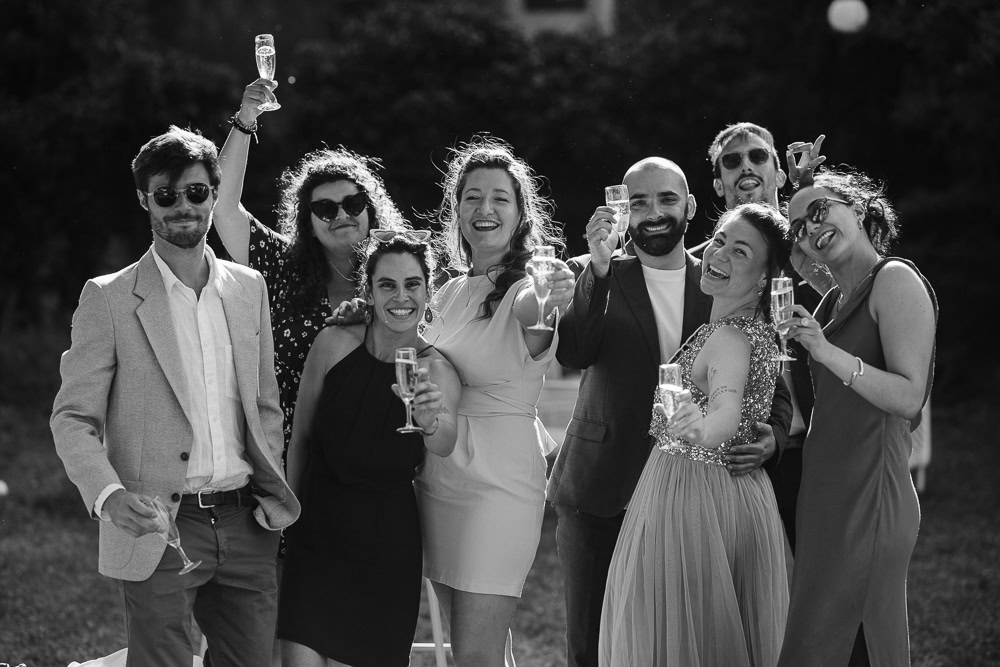
Cocktail hour is where I work hardest. Groups re-form, people drink, laugh, catch up on ten years in twenty minutes. That’s where the photographs you aren’t thinking about today are hiding — the ones you’ll come back to most often.
It’s also the only point in the day where I ask you for a bit of organization: the group photographs.
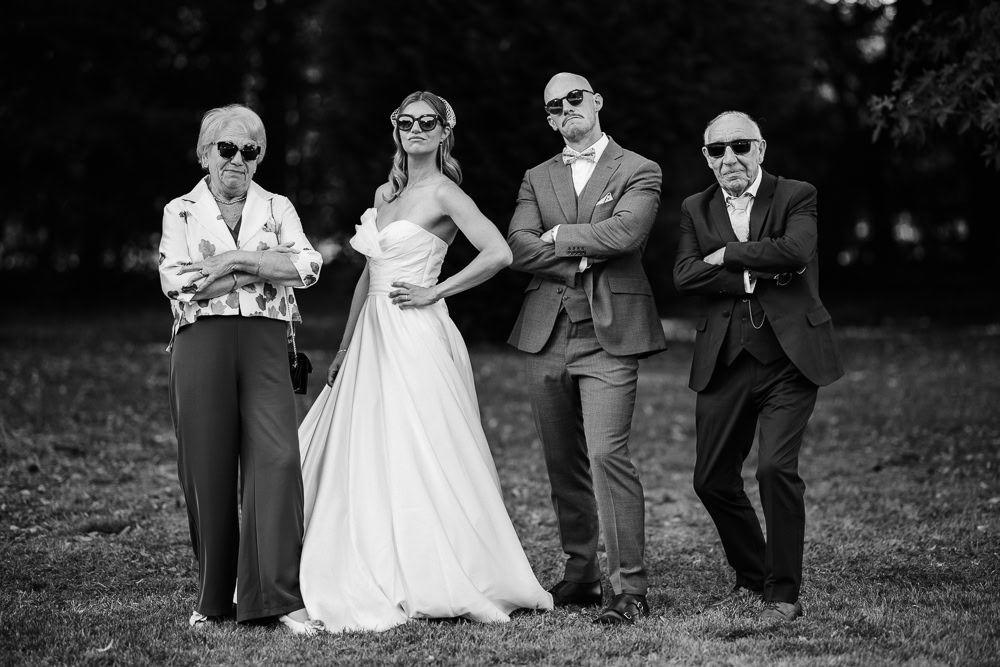
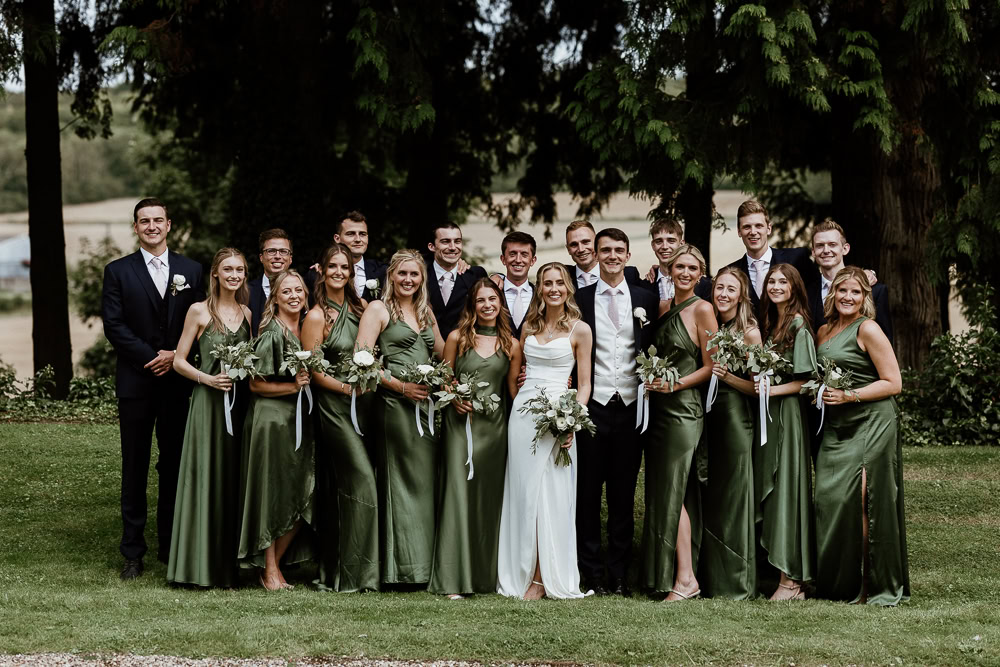
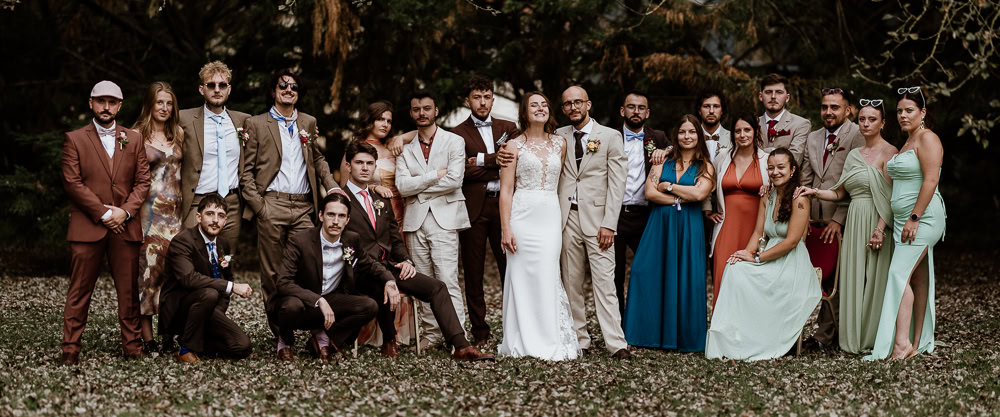
I know what you’re thinking — lining up like a school portrait for an hour, no thanks. I agree. But getting your parents, your grandparents, your brothers and sisters together for one picture is something you won’t be able to redo later.
The style barely matters: straight and classic or completely irreverent, what counts is that it looks like you.
What does matter is the method, because it’s the difference between fifteen minutes and an hour lost. Pick one person from each side who knows both families and can call people by name. Keep the list short — immediate family only. Get hold of a microphone and a portable speaker; nothing else saves as much time. I scout a decently lit spot in advance, and we move through it. Fifteen to twenty minutes, and everyone goes back to their drink.
During cocktail hour, parents and grandparents tend to hang back and leave the floor to others. Without that short dedicated window, I can spend the whole evening without managing to isolate them properly in the crowd. Those fifteen minutes are your guarantee of a real portrait with each of them.
They’re also, often, the kind of photograph whose worth only becomes clear years later.
Time alone together
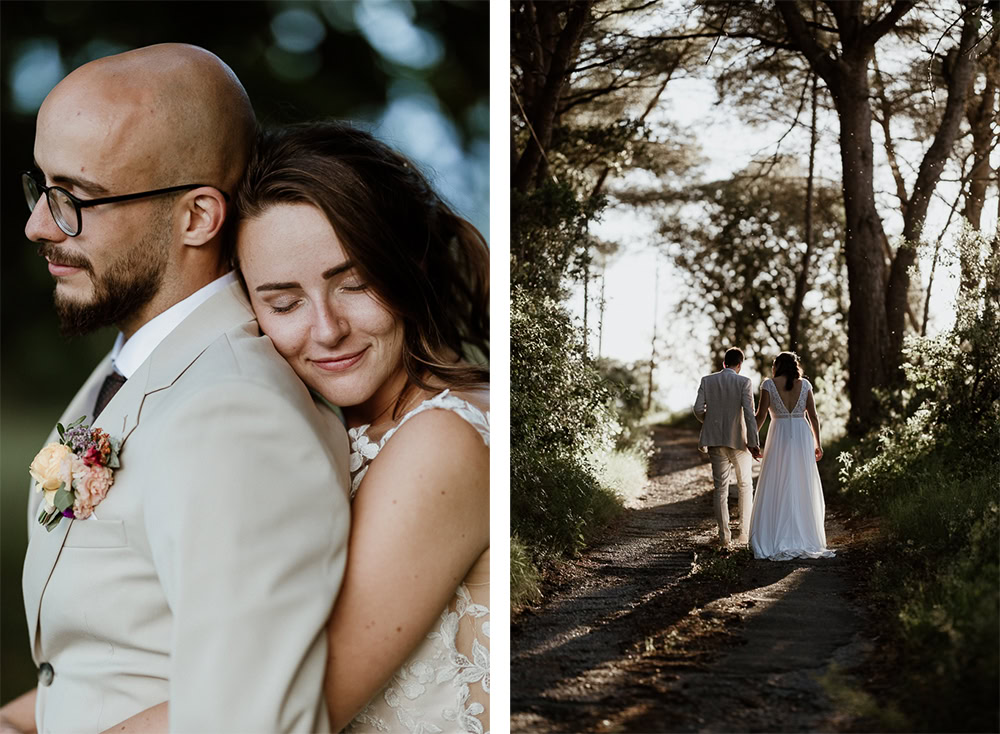
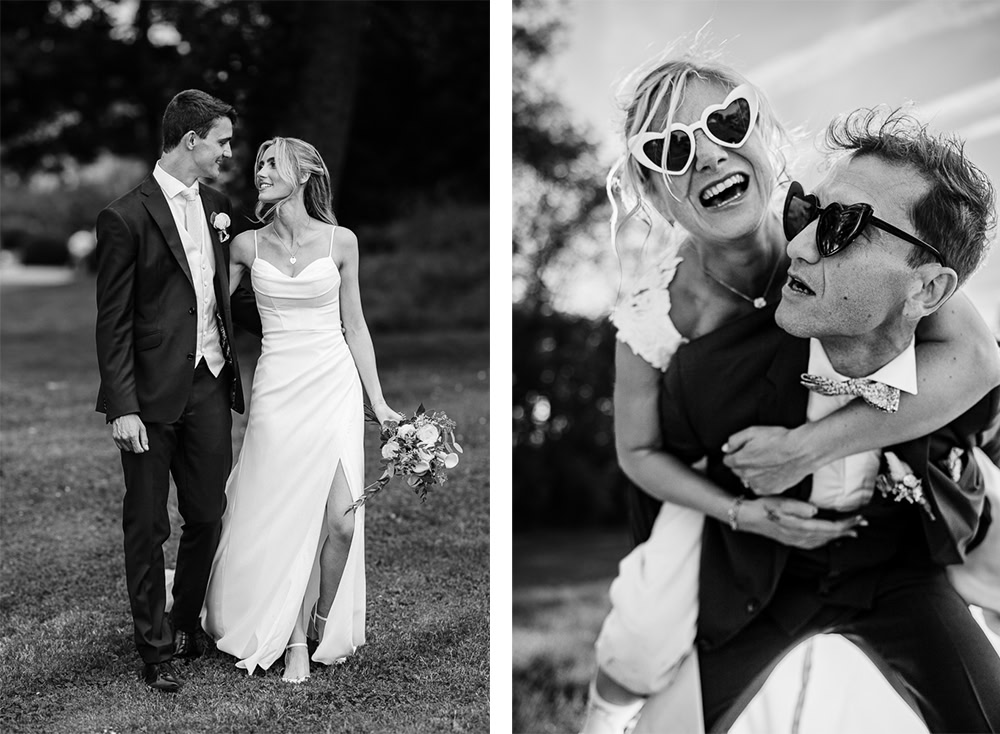
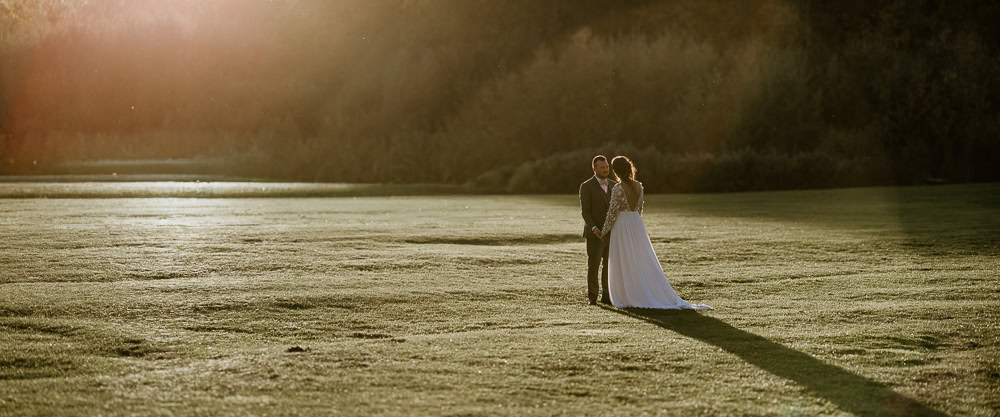
For years, Golden Hour was presented as an absolute rule: couple portraits happen at sunset, end of discussion. That’s no longer true, and it’s just as well. I’ve made photographs I love under heavy cloud, in flat June sunshine, and in light rain. Light is something you work with, not something you’re at the mercy of.
If I still recommend the end of the day, it’s for a reason that has nothing to do with technique. It’s the moment you’ll need it most.
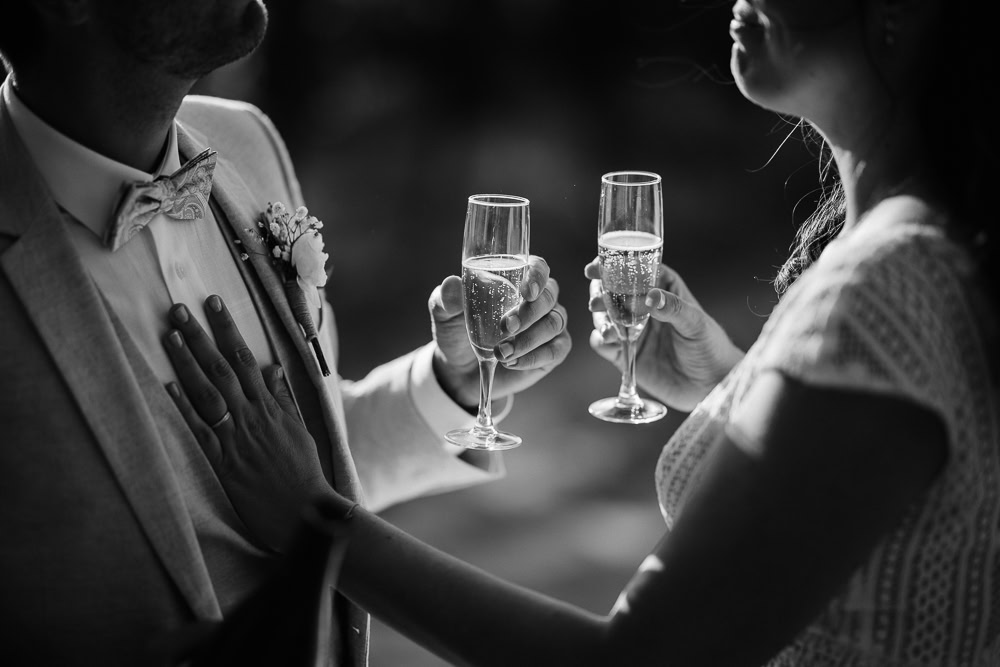
After the ceremonies and the rush of cocktail hour, something will feel missing and you won’t quite be able to name it. It’s simply that you haven’t been alone together since morning. Twenty to thirty minutes is enough. We slip away, we walk a little around the property — no need to go far, the best spots are almost always within a hundred yards.
I won’t direct you like actors. I’ll give you two or three things to do with your hands, and the rest is yours. That’s usually when the sentence arrives: that’s it, we’re married.
Once I have what I came for, I step back and leave you as long as you want. Nobody is really waiting for you.
The reception
Dinner and the reception mark the shift. The pressure drops, and the day becomes a party.
Two things decide whether the pictures work from here on, and you settle both of them long before I show up.
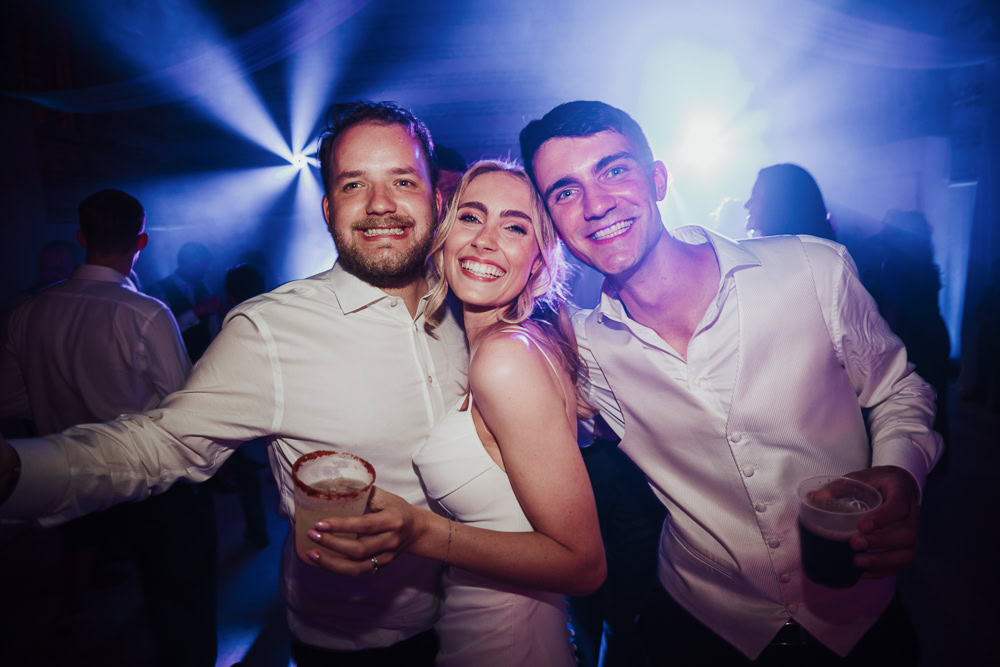
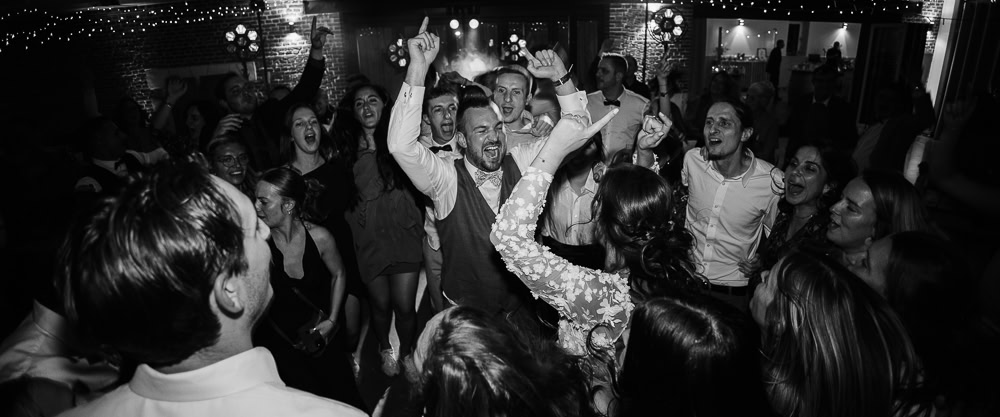
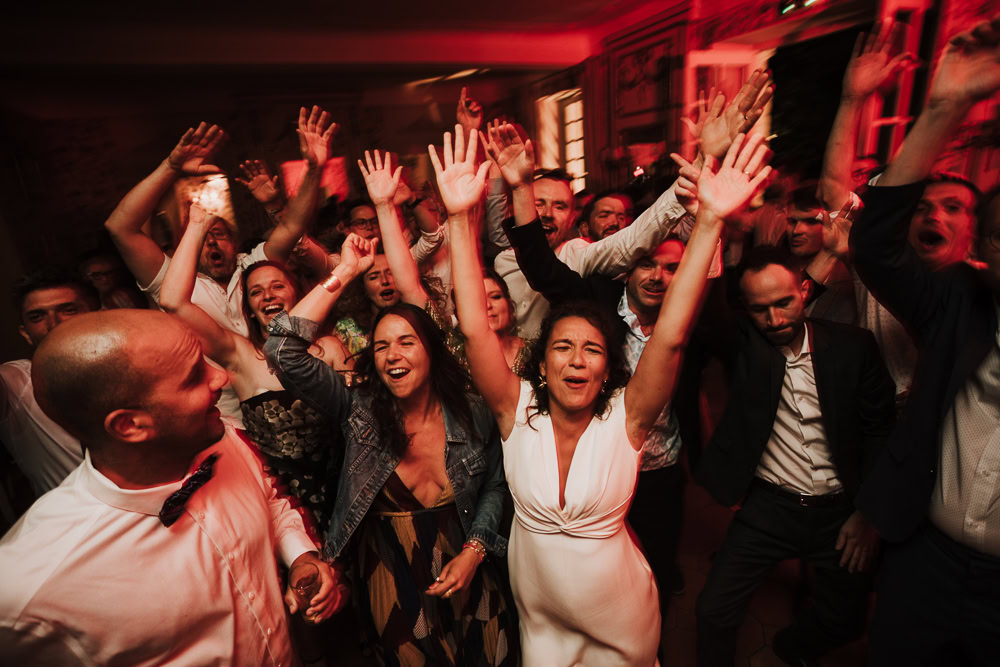
The first is light. Give the evening to a DJ or a production company that offers a proper lighting package, fog machine included. This isn’t a comfort detail: without lighting, a dance floor never takes off, and the photographs end up against a flat black wall. Add a few beams and a little haze and the same floor becomes a set. I have the gear to give your pictures a look, but I can’t manufacture an atmosphere that isn’t there.
The second is the schedule, and the advice comes down to one word: lighten it. The people close to you have already planned speeches, videos, surprises you don’t know about. Add more and you’ll break the momentum three times over the course of the night. Same for dinner: the endless seated banquet has had its day. Your guests ate well at cocktail hour and are waiting for one thing only. An efficient main course, a generous cheese course and dessert spread, and you’ve bought yourself an extra hour of dancing. Food stations work better than plated service more often than not — people move, they talk, and I work far better.
Once the first dance is underway, I disappear into the crowd.
A timeline to work from
Here’s the shape I see working best, as a starting point. None of it is compulsory — bend it to suit your venue and your mood.
| Moment | Rough duration | What’s really happening |
|---|
| Friday evening — welcome dinner | 2 to 3 hrs | The families meet without tomorrow hanging over them |
| Brunch | Noon, 1.5 hrs | The photographer becomes a familiar face |
| Getting ready | Late morning into early afternoon | Daylight, small group |
| First Look | 20 min | A quiet moment, just the two of you |
| Ceremony | Depends on the format | Only one, if the civil ceremony was held earlier |
| Group photographs | 15 to 20 min | Start of cocktail hour, short list, microphone |
| Cocktail hour | 1.5 to 2 hrs | The heart of the coverage |
| Time alone together | 20 to 30 min | Late afternoon, a walk around the property |
| Dinner | Keep it short | One main course, cheese and dessert spread |
| First dance and reception | — | Proper lighting, fog machine |
A day that looks like you
All of it comes back to one idea: build your day around what you actually want to live through, rather than around what’s usually done.
The civil ceremony held earlier, the brunch, the First Look, the late-afternoon walk — each of those choices hands you back an hour, and every hour you get back shows up in the photographs.
There’s a part of my work that appears in none of them. Watching enough days unfold teaches you to feel when a timeline is about to jam. I talk to your DJ, your caterer, your planner; I flag when something needs to start, I quietly shift what can be shifted. You shouldn’t have to notice — that’s the whole point.
What stays with you from a wedding day are the moments you forgot anyone was watching. Everything else is organized so those get a chance to happen.
Some couples take this logic all the way and marry just the two of them, or in front of a handful of people. That’s a different way of doing it, with constraints of its own — I’ve written a full guide to it.
You’ll find how I approach wedding coverage here, and full weddings in the galleries if you want to see what a day built this way actually looks like.
Frequently asked questions
Why hold the civil ceremony the day before, or earlier in the week?
Because it clears a rigid slot, one or two car journeys and a whole logistics problem out of the wedding day. Only one ceremony is left, and the day can start later. It’s also what makes a Friday welcome dinner possible. In France this matters especially: only a civil ceremony at the town hall carries legal weight, so it has to happen somewhere on your schedule — better on its own day than in the middle of your celebration.
How do you get good getting-ready photographs?
It comes down to the room. A large space with a wide window or French doors beats a cluttered bedroom under a yellow bulb every time. Keep the group small rather than inviting everyone, and start without a deadline hanging over you — ideally after brunch. Daylight and the absence of pressure do most of the work.
Should we do a First Look before the ceremony?
I’d recommend it. Seeing each other beforehand, away from everyone, gives you something the rest of the day won’t: after the aisle you go straight into vows, speeches and congratulations without drawing breath. It takes nothing away from the aisle itself, which is a different feeling entirely. You get two strong moments instead of one.
When should we do the group photographs?
At the very start of cocktail hour, so guests are released quickly. Budget fifteen to twenty minutes if the setup is ready: one person from each side who knows both families, a short list limited to immediate family, and a microphone with a portable speaker to call people over. It’s the only reliable way to end up with a proper portrait alongside your parents and grandparents, who tend to hang back for the rest of the day.
What’s the best time for couple portraits?
Late afternoon is still my preferred window, less for the light than for what you’ll do with it: after the ceremonies and cocktail hour, you’ll want to be alone together. Twenty to thirty minutes, walking around the property, is enough. That said, good photographs happen at any hour — heavy cloud gives beautifully soft light, and flat sun can be worked with.
What happens if it rains?
We adapt. An overcast sky is genuinely excellent light for faces. If it rains, I use the indoor spaces I scouted on arrival, or we work with a clear umbrella. It’s never the scenario anyone hopes for, but it isn’t a lost one either.
How do we get good reception photographs?
It’s decided when you choose your DJ. Ask for a full lighting package with a fog machine. Without it the background goes flat black, whatever gear the photographer is carrying. On my side I work with fast lenses and off-camera flash, which keeps the atmosphere of the room rather than flattening it.
Why choose a documentary wedding photographer?
Because you stay the people living the day rather than extras in it. I photograph what happens instead of staging it, which means arriving early, making myself forgettable, and accepting that the best frames won’t be the ones anyone planned.
How far ahead should we build the timeline with our photographer?
In broad terms as soon as you book, then in detail about two months out. That’s when you fine-tune the hours against the exact sunset time at your venue and the rhythm your caterer has planned. Two months out, everything is still movable; two weeks out, much less so.
Should the photographer be there from the brunch onwards?
If you want the full story of the day, yes. Arriving at brunch lets me catch the reunions and the loose mood of the early hours, and above all lets your guests get used to me. The earlier they stop noticing the camera, the better everything after it works.
Can we get married just the two of us, or with only a handful of guests?
Yes — that’s an elopement, or an intimate wedding depending on the scale. No seating plan, no slots to hold. In France the town hall step remains compulsory, since only the civil ceremony is legally binding, but nothing obliges you to build a reception around it. Most couples handle the civil ceremony quietly at home and hold a symbolic ceremony wherever they like. I’ve covered the whole subject here, legal framework included.
How far in advance should we book?
Saturdays between May and September usually go twelve to eighteen months ahead. For a peak-season date, get in touch early; outside that window there’s far more room. You can check my availability in one line.


